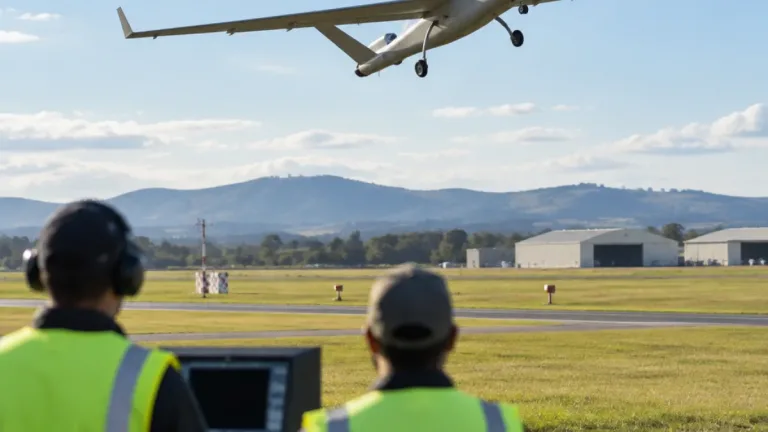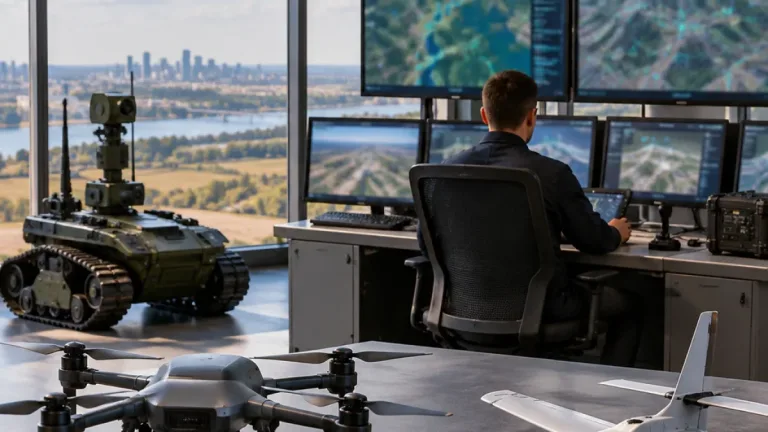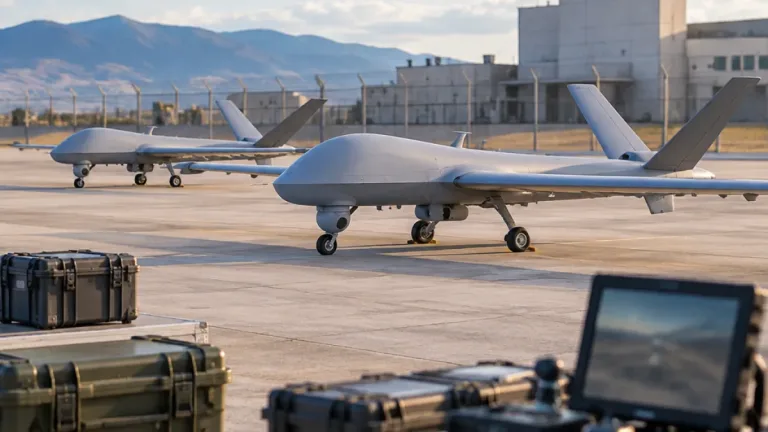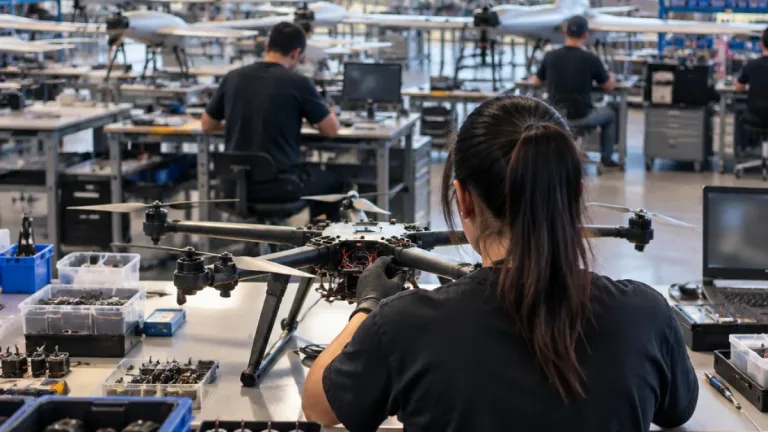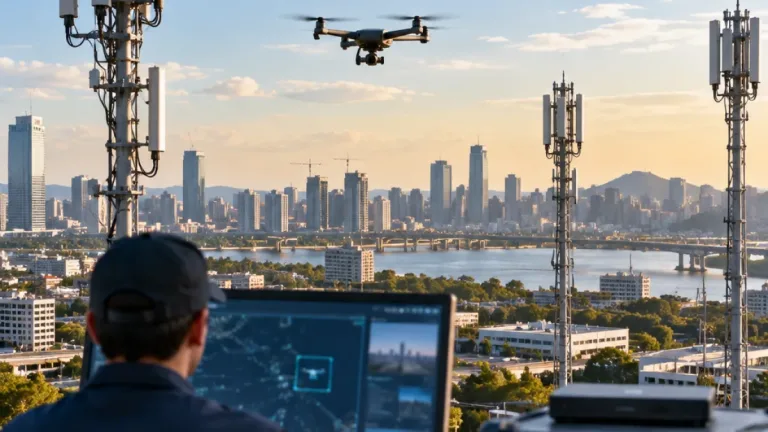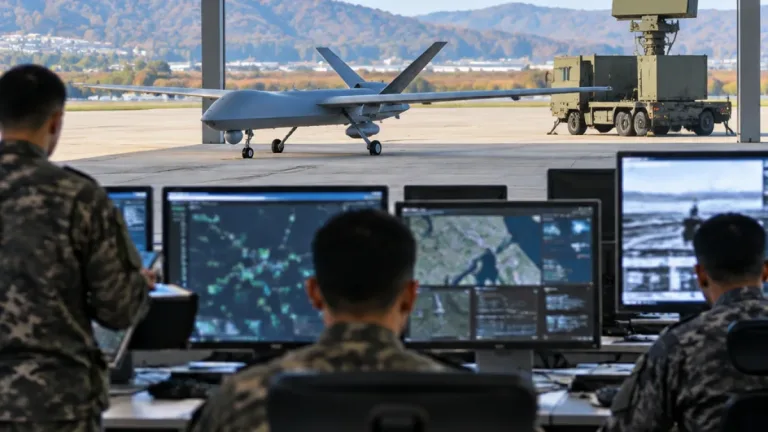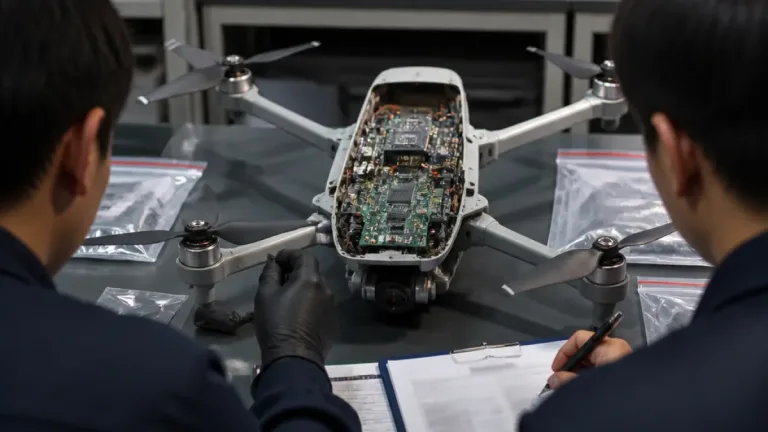

Federal Communications Commission Chairman Brendan Carr used a roundtable in North Dakota to defend restrictions on new foreign-produced unmanned aircraft systems and components, while local officials and industry representatives pressed for a faster path through the agency’s approval process.
Carr met with more than a dozen leaders connected to the Grand Forks-area UAS industry on Monday at GrandSky. The discussion focused on how the FCC’s policy affects drone operations, manufacturers and government buyers. The restrictions do not apply to drones already authorized by the FCC for use in the United States before December 2025, but they prevent government agencies and companies from purchasing new foreign drones, subject to some exceptions.
“We are sending a clear signal to markets, to investors and to domestic drone manufacturers that now is an opportune time to invest.” — Brendan Carr, FCC chairman
Carr said the policy had been followed by more than $6 billion in domestic investment. The figure was presented during a discussion that brought together companies, local government and public-safety users in a region that has become a center for UAS and counter-drone development.
Industry seeks a shorter path through the FCC
Sen. Kevin Cramer, R-North Dakota, organized and led the roundtable. He said the federal government should create incentives for domestic drone companies, including a more streamlined process for obtaining FCC clearance to use parts of the frequency spectrum.
“We need a sandbox. We need a one-stop shop for some of these clearances so that it doesn’t take months and months. I support the prohibition of Chinese drones, but we have to properly incentivize and accelerate development of our own.” — Sen. Kevin Cramer
The request reflects a practical constraint for companies developing UAS and counter-UAS products: access to spectrum and related regulatory clearances can affect testing, deployment and commercial availability. Cramer’s proposal was described as an incentive and process change, not as a new rule or an already approved FCC program.
Public-safety buyers face a constrained market
The Grand Forks region has attracted major investments from Northrop Grumman and General Atomics, as well as smaller companies working on unmanned and counter-drone systems. GrandSky and Grand Forks Air Force Base were identified as important parts of that regional ecosystem.
At the same time, the policy creates a transition challenge for public-safety agencies. The vast majority of drones used by American law enforcement are made in China, according to the report. Existing aircraft that received FCC authorization before December 2025 can remain in use under the described policy, but agencies and companies seeking new foreign-made aircraft face restrictions on new purchases.
- Existing aircraft: Drones authorized by the FCC before December 2025 are not covered by the purchasing restriction described at the roundtable.
- New purchases: Government agencies and companies are barred from purchasing new foreign drones, with some exceptions.
- Domestic development: North Dakota officials are seeking incentives and faster FCC clearances for UAS manufacturers.
Grand Forks County Sheriff Andy Schneider, whose department is responsible for maintaining GrandSky’s perimeter security, said foreign-made drones currently offer greater reliability than American alternatives. His assessment underscored the gap that domestic manufacturers are being asked to close as restrictions reshape procurement options.
The roundtable therefore combined a policy defense with a warning from users: directing demand toward domestic UAS companies does not by itself resolve questions about product reliability, spectrum access or regulatory speed. Those issues will remain central for agencies and businesses replacing aircraft that can no longer be newly purchased under the FCC restrictions described at the meeting.