After harvest, many fields are left bare or tilled. Andrew McDaniel, a Shelby County, Indiana, farmer, is taking a different approach: his operation is no-till and puts cover crops on about 80% of its farms each year.
McDaniel grows oats and radishes for the winter, although the cover-crop mix changes from one field to another. He said the plants help retain nutrients, improve water infiltration and reduce erosion, making soil management the main reason for keeping living cover in the fields.
Seeding before harvest
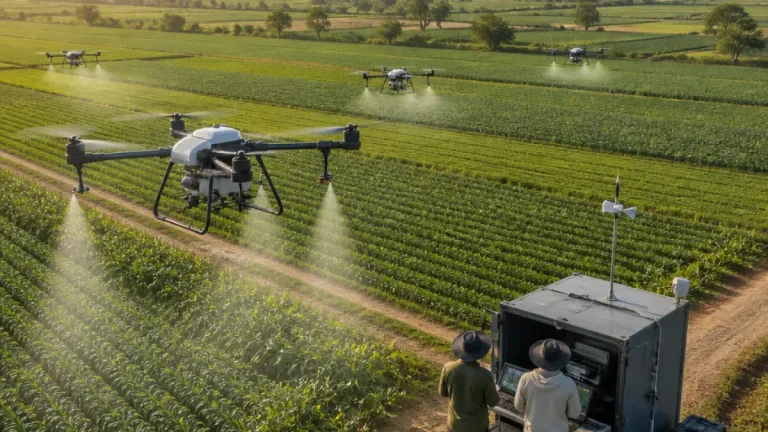
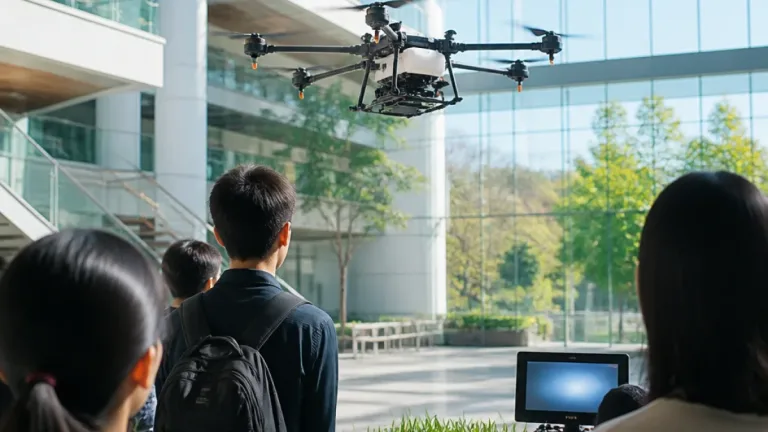
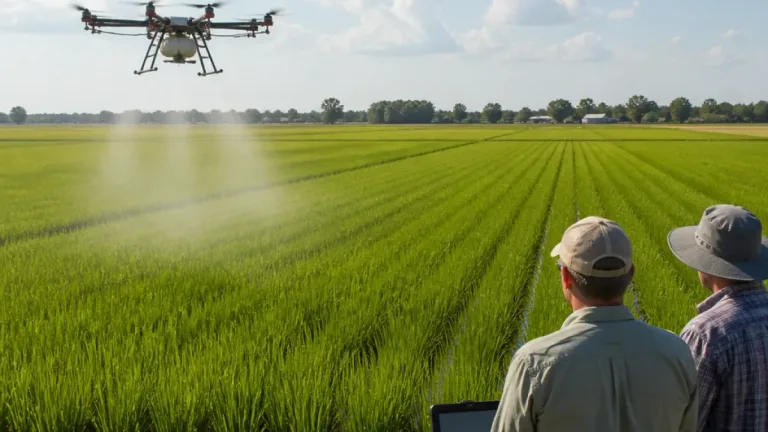
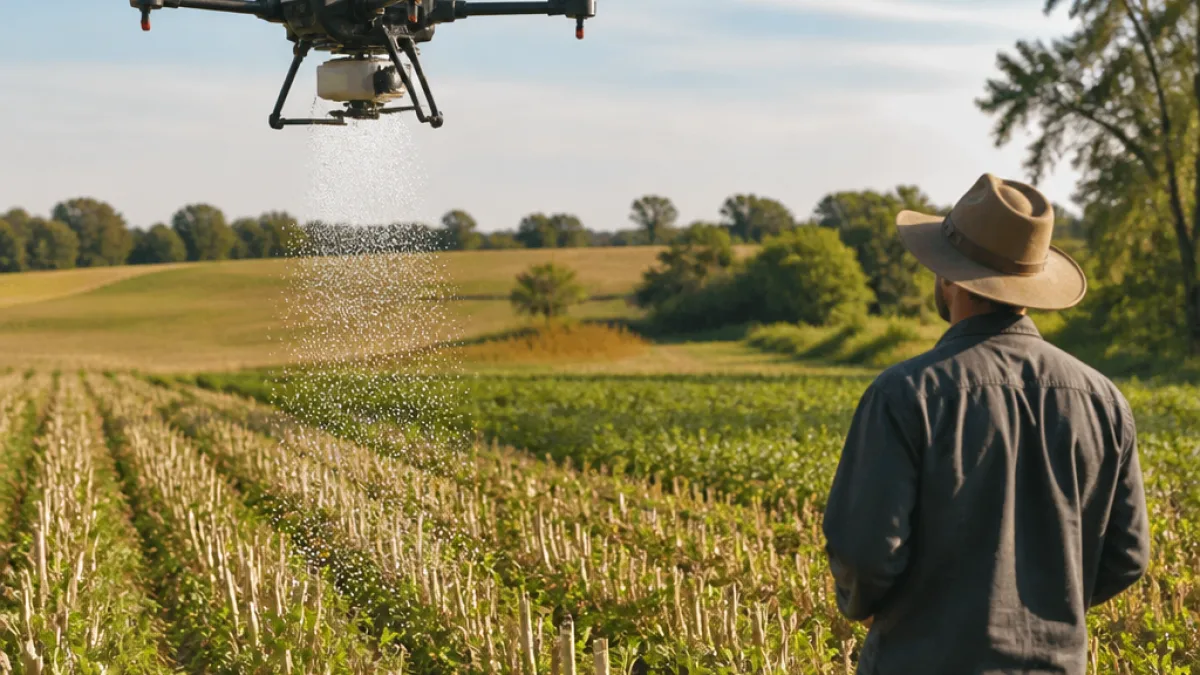
Several methods are being used to establish the crops. One field was planted with a conventional air-seeder planter, while McDaniel is using a drone application for the first time this year. The approach allows seed to be placed while a standing crop remains in the field, giving the cover crop additional time to emerge before the main crop is harvested.
“Obviously, one of the biggest benefits for the drone is is being able to apply while you have a standing crop in the field just kind of gives it that seed extra time to emerge and get a head start before you harvest.”
McDaniel said that early start means the cover crop can already be established when harvesting begins. The timing is particularly relevant to farms where waiting until after harvest would shorten the period available for emergence and growth.
A service built around difficult fields
The drone work is being provided by Geis Aerial Application, which is in its second year of business. Co-owner Lane Geis said the company was created to support local farmers and that drones are useful where fields have unusual boundaries, trees or other features that make application more difficult.
- McDaniel is using drone seeding for the first time this year.
- His operation is 100% no-till and applies cover crops to about 80% of its farms.
- Geis Aerial Application is in its second year of business.
Geis described precise boundary placement and GPS-based operation as important to controlling where material is applied. He also said the technology can help operators use their product efficiently around abnormal fields and obstacles.
The business expects agricultural drone use to expand, and Geis said more farmers will use the aircraft as a tool on their operations. McDaniel likewise said cover-crop use is growing in Indiana, although the choice of species remains dependent on the conditions and needs of each field.
Different fields, different choices
McDaniel emphasized that cover crops do not provide identical benefits in every setting. The appropriate species depend on the farm and the field, rather than on a single standard prescription. That variability places the drone within a broader management process: it can provide another way to deliver seed, but crop selection and timing still depend on the farmer’s practices and the characteristics of the land.