The U.S. Army has selected AeroVironment’s LOCUST X3 for its Enduring-High Energy Laser, or E-HEL, program, according to Defence24. Leonardo DRS will supply the electrical-power and thermal-management subsystems for the system under an agreement with AeroVironment.
The development brings together a directed-energy weapon supplier and a company responsible for key supporting equipment. The arrangement does not amount to a declaration that the system has entered operational service.
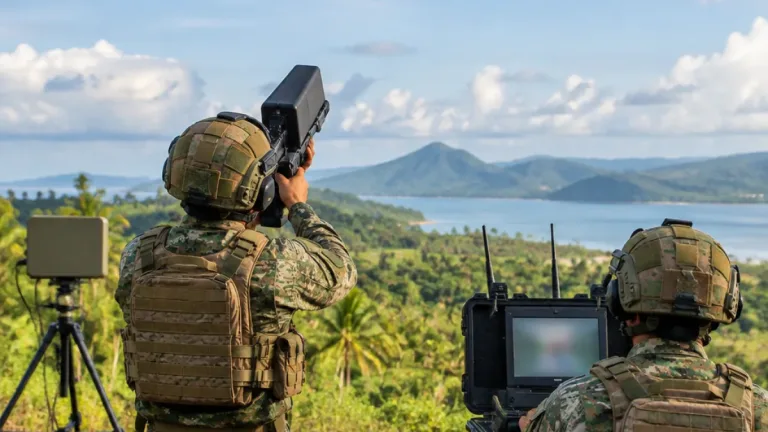
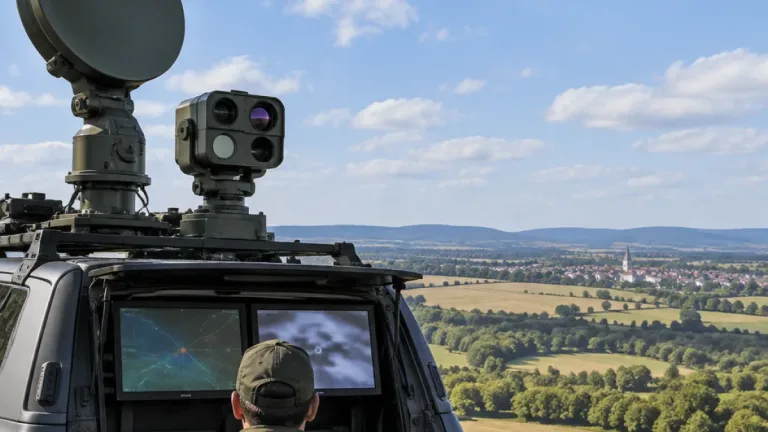
A mobile laser for counter-drone missions
The LOCUST X3 is designed to engage unmanned aerial vehicles and to be installed on different land platforms. Defence24 reported that the system is expected to provide approximately 30 kW of power. The Army’s E-HEL effort is intended to provide scalable protection for ground-force subunits against unmanned aerial platforms.
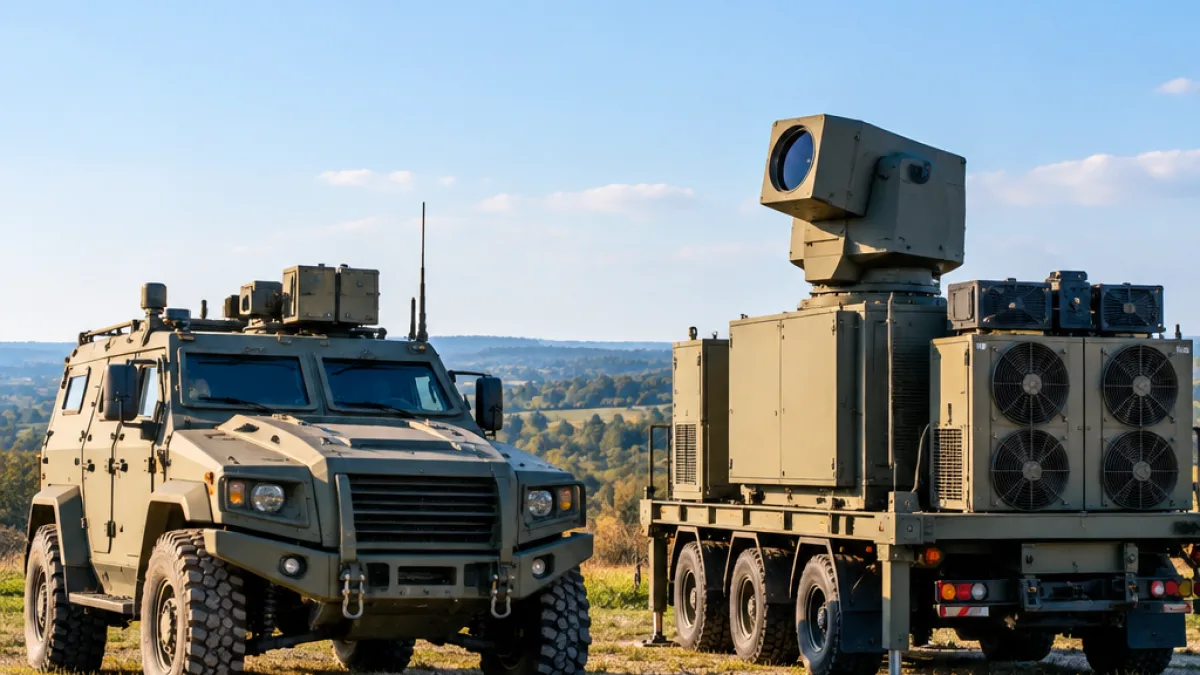
One planned carrier is the JLTV, or Joint Light Tactical Vehicle, family of high-mobility armored vehicles. The system can also be installed on pallets transported by trucks, according to the report. That approach gives the program more than one possible vehicle or transport configuration while keeping the laser focused on protection for units operating on the ground.
| Program element | Detail reported |
|---|---|
| Army program | Enduring-High Energy Laser (E-HEL) |
| Selected system | AeroVironment LOCUST X3 |
| Power | Approximately 30 kW |
| Power and cooling supplier | Leonardo DRS |
| Planned platforms | JLTV family and truck-transported pallets |
Power and thermal management are central subsystems
Leonardo DRS’s role covers two functions that are essential to a high-energy laser: supplying electrical power and managing heat. The company’s thermal-management responsibility includes the cooling system, as described in the report. The agreement therefore concerns the subsystems needed to support the laser rather than a separate counter-drone effect.
The E-HEL system also uses a Modular Open Systems Approach, or MOSA, architecture. Defence24 said that this architecture is intended to allow different software and equipment to be integrated into the system. The report did not identify the specific software, sensors or other equipment that may be connected through that approach.
- AeroVironment’s LOCUST X3 is the selected laser system for the E-HEL program.
- Leonardo DRS will provide electrical-power and thermal-management subsystems.
- The system is intended for mobile ground platforms, including JLTV vehicles and truck-transported pallets.
The selection places the counter-drone mission within a broader Army effort to develop mobile protection for ground units. The reported configuration combines a laser weapon with vehicle and pallet options, while the MOSA architecture is intended to support the integration of additional software and equipment. The information reported by Defence24 does not establish the system’s deployment status, engagement performance or schedule beyond the selection and supplier agreement.