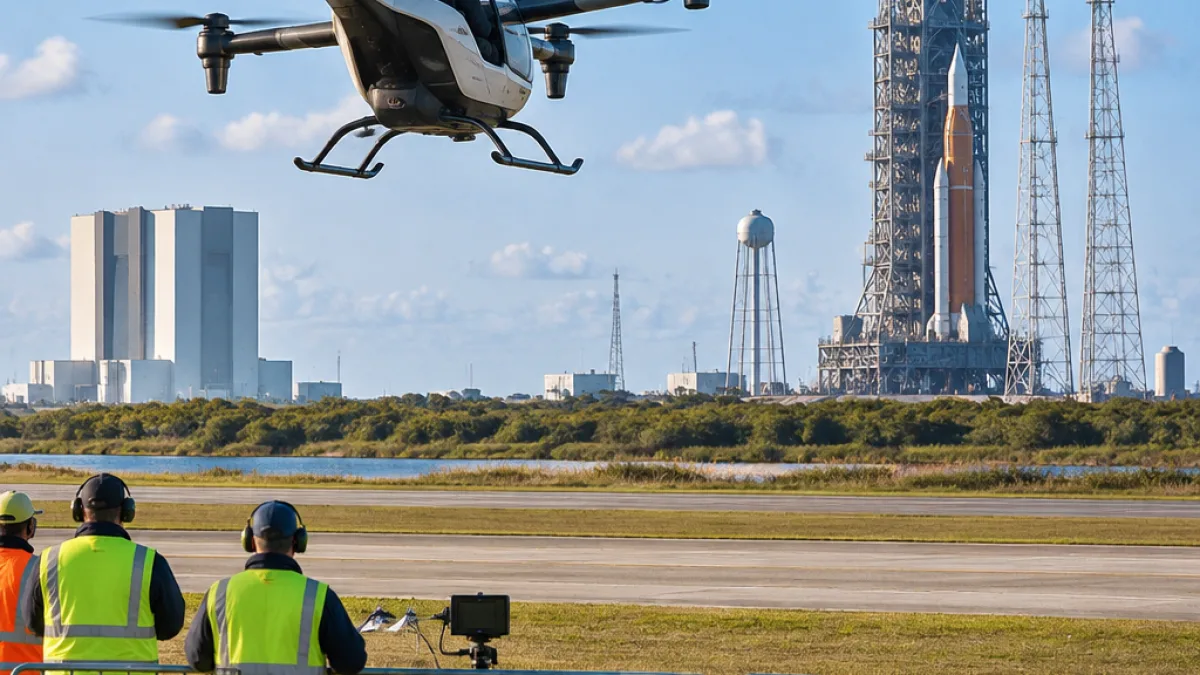
Transportation Secretary Sean Duffy flew a Jetson ONE at NASA’s Kennedy Space Center in Florida on November 5, piloting the single-seat electric aircraft during flybys at UP.Summit, an event held as part of NASA’s MAX POWER expo.
Jetson said in a November 16 release that Duffy is the first sitting U.S. transportation secretary to pilot a personal eVTOL. The company said he took off alone and controlled the aircraft’s passes with its joystick. Duffy later posted video of the flight to X at 5:26 pm ET on November 5; Fox Business broadcast footage the following day.
“isn’t the future anymore.”
Duffy used those words in his post about the flight. The demonstration took place under the FAA’s existing framework for ultralight aircraft rather than under a commercial aircraft certification or air-taxi authorization.
Part 103 keeps the flight recreational
The Jetson ONE operates under Part 103, the FAA’s rule for ultralight vehicles. Under the framework described for the flight, a pilot certificate, aircraft registration and airworthiness certificate are not required. The tradeoff is a strict limit on how the aircraft may be used: Part 103 covers recreation and sport.
- No pilot certificate is required for the operation described.
- No registration or airworthiness certificate is required under the ultralight rule.
- The aircraft’s use is limited to recreation and sport under Part 103.
That distinction matters because the FAA is part of Duffy’s department. The event placed a senior federal transportation official in an aircraft category that can be flown without the licensing and certification requirements associated with broader commercial operations, while the same type of vehicle is being considered for a public-safety role.
Police aircraft still seeking FAA approval
Five Jetson ONE aircraft flew in formation from the Shuttle Landing Facility during the public airshow weekend on November 7 and 8. One belonged to the Florida Polytechnic University Police Department, which intends the aircraft for campus patrols and emergency response.
Florida Polytechnic University unveiled that aircraft on October 20 and said at the time that it was still seeking FAA approval to use it. That proposed mission is distinct from Duffy’s recreational flight: campus patrol and emergency response would not, by themselves, fit the recreational purpose described for Part 103. The university’s stated need for approval underscores that acquiring an ultralight aircraft does not automatically authorize a public agency to deploy it operationally.
The juxtaposition also gives the Kennedy Space Center event a regulatory dimension beyond the flight itself. A private demonstration can take place within the limits of an ultralight rule, while an agency seeking to use the aircraft for official duties must address the applicable FAA requirements before beginning those missions. The extracted announcement provides no indication that Florida Polytechnic’s approval had been granted.
A larger NASA event
NASA’s recap identified UP.Summit among the partners involved in private and public events held from November 4 through November 8. President Trump visited the summit on November 6, and the U.S. Air Force Thunderbirds headlined the airshow.
Jetson’s release described Duffy’s flight as a milestone for personal electric flight, but the regulatory status remains central: the operation was conducted as a recreational Part 103 flight, not as evidence of approval for passenger service, commercial transport or public-safety operations. The aircraft’s appearance in a police formation similarly did not establish that its intended campus missions were authorized.