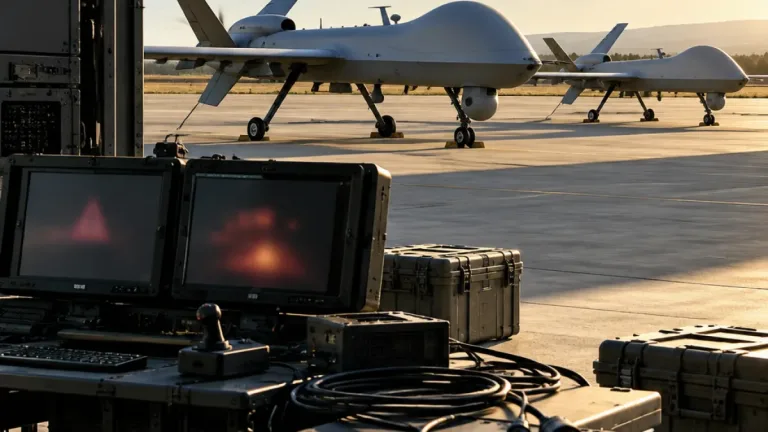
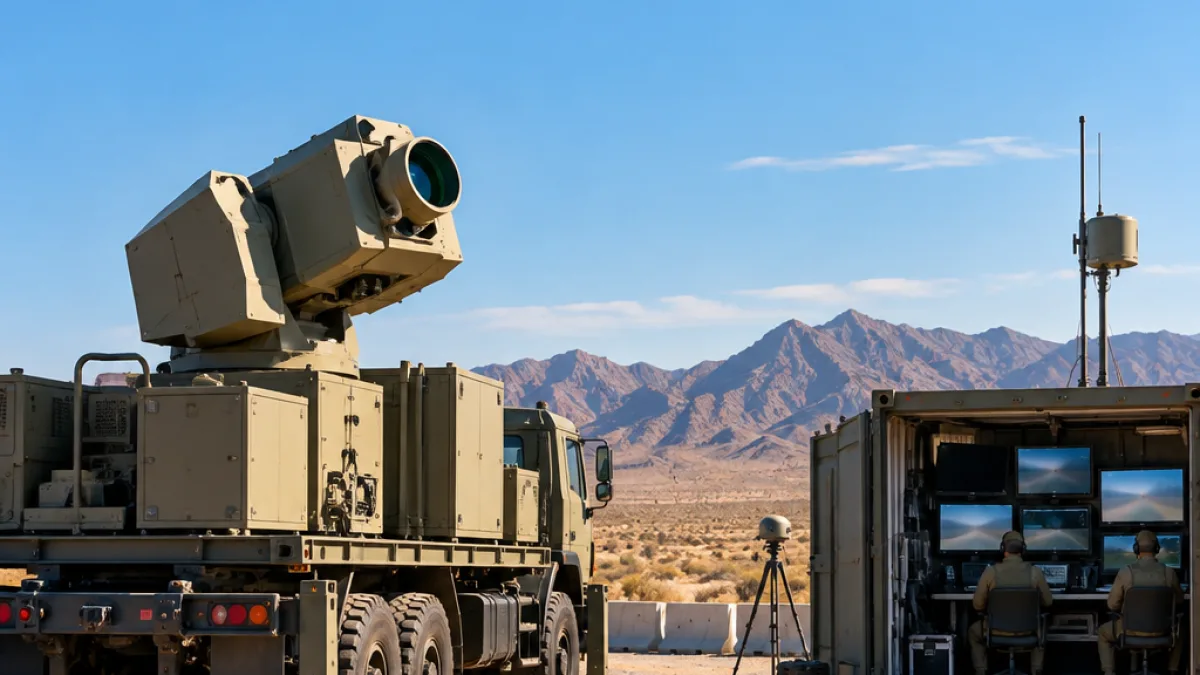
The Pentagon has selected seven high-energy laser systems for a live-fire counter-drone evaluation scheduled for mid-December at Dugway Proving Ground in Utah. The test could lead directly to military purchase orders as the Department of War looks for lower-cost ways to defend against hostile unmanned aircraft.
The selections were announced on November 16 by the Pentagon’s Office of Research and Engineering and Joint Interagency Task Force 401 (JIATF 401), after officials reviewed 13 technical proposals. The participating companies must complete safety certifications and connect their systems with military command-and-control networks before the evaluation.
Seven systems selected
The systems will be assessed on their ability to track and defeat representative drone targets. The selected companies and products are:
- Allen Control Systems: BULLFROG HEL
- Aurelius Systems: ARCHIMEDES
- AeroVironment (BlueHalo): LOCUST X1
- Kord Technologies: FIREFLY
- Lockheed Martin (IPG): Crossbow
- Thor Dynamics: LASER ARMOR HEL
- Yrikka: TALOS drone-based HEL
The December event is structured as more than a technology demonstration. The Pentagon’s announcement indicates that successful performance could move the systems toward military orders, although the extracted announcement does not identify a quantity, contract value or purchasing decision.
Lasers as part of a layered defense
High-energy lasers use concentrated electromagnetic energy rather than a missile or other expendable projectile. The U.S. Government Accountability Office has said the weapons could support repeated engagements at relatively low cost, because their primary requirements are electrical power and the ability to manage heat rather than a new round for every target. The Pentagon describes that characteristic as a “deep magazine.”
That operating model is intended to address a central counter-drone problem: inexpensive unmanned aircraft can impose disproportionate costs when defenders rely on missiles or ammunition. A laser may reduce the cost of individual engagements, but the systems still have operational constraints. The technology generally engages one target at a time and requires a clear path between the weapon and the target. Fog and other poor atmospheric conditions can reduce effectiveness, while power generation and cooling remain significant requirements.
Those limitations mean the systems are expected to supplement, rather than replace, other counter-drone capabilities. The Pentagon’s evaluation will therefore examine not only whether the systems can defeat representative targets, but also whether they can operate with military command-and-control networks. The selected systems are being considered alongside missiles, electronic warfare and other defenses as the U.S. military develops a broader response to drone threats.