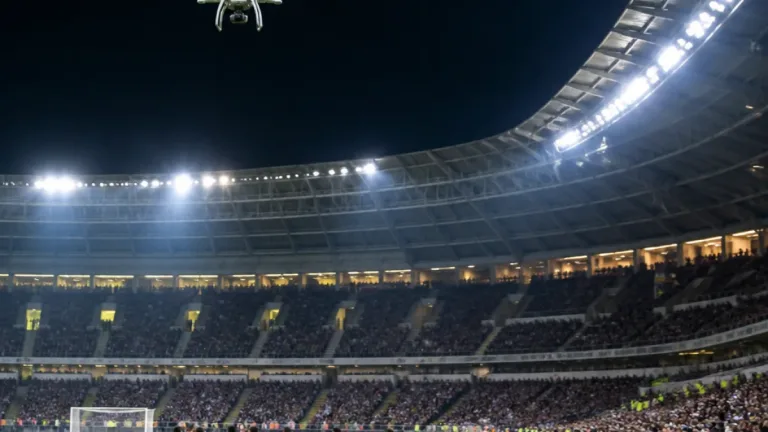
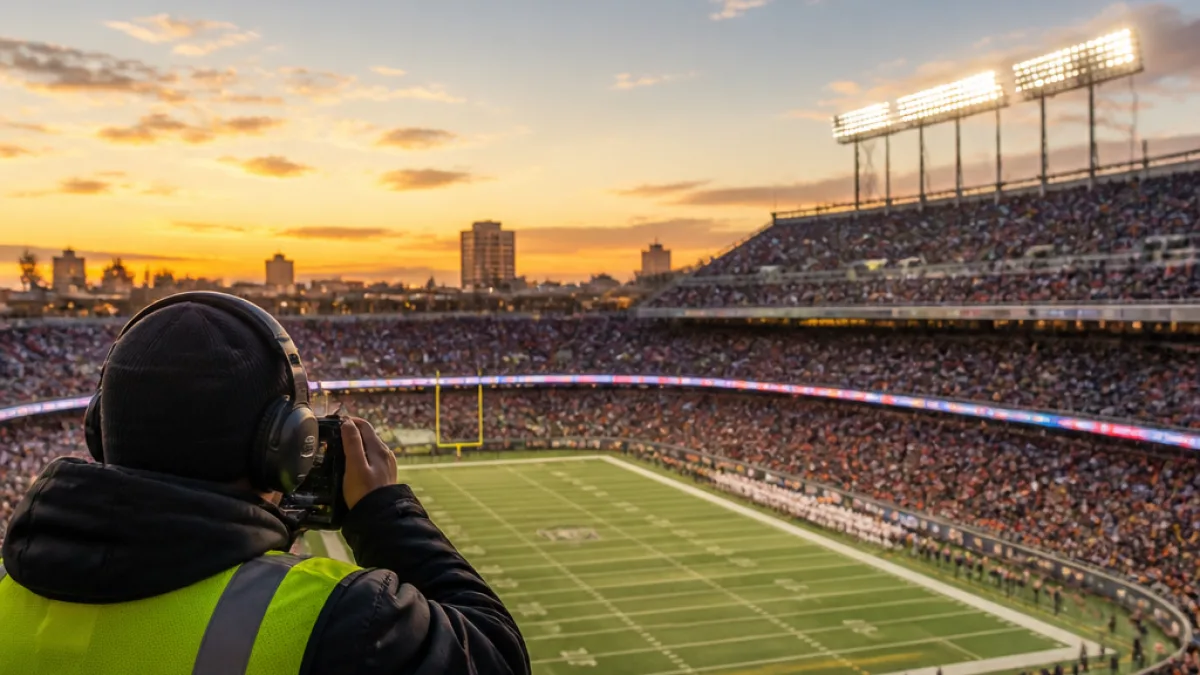
Play was halted during the Green Bay Packers-Carolina Panthers game at Lambeau Field after a drone was reported near the stadium, interrupting a Thursday Night Football broadcast and sending both teams back to their sidelines. The incident was described during the Amazon Prime Video broadcast, which reported that officials were waiting for the aircraft to clear the area before allowing the game to resume.
The interruption came with Green Bay leading 20-10 and facing third-and-one. The broadcast said the officials directed players away from the field while the drone was being dealt with. It did not identify the operator, establish whether the aircraft entered restricted airspace, or provide details about any law-enforcement response.
“There’s apparently, we’re being told there’s a drone. Not ours. League is very strict about making sure a drone doesn’t penetrate the outer rim of the stadium. So that’s the issue.” — Al Michaels, during the Amazon Prime Video broadcast
The reported sighting took place in an airspace environment covered by a specific Federal Aviation Administration restriction. FAA rules prohibit drones and model aircraft from operating within three nautical miles of a stadium that seats more than 30,000 people when a qualifying sporting event is taking place. NFL games are specifically included in the guidance cited during the broadcast.
Restrictions around large stadiums
Lambeau Field has a listed capacity of 81,441, placing it well above the threshold. The restriction begins one hour before the game and remains in effect until one hour after it ends. That timing is intended to cover the period surrounding the event rather than only the minutes when the teams are actively playing.
- The FAA restriction applies within three nautical miles of a qualifying stadium.
- The rule covers drones and model aircraft.
- The restricted period runs from one hour before the event until one hour afterward.
- NFL games are included among the events identified in the guidance cited in the broadcast.
The game stoppage illustrates the operational problem created by an unidentified aircraft near a crowded venue. Stadium personnel may not immediately know who is controlling a drone, whether the flight is authorized, or what equipment the aircraft is carrying. According to the broadcast account, the response was to clear the playing area and pause the event while the aircraft moved away, rather than allow play to continue beneath it.
That response is a safety measure, not a determination that the drone posed a deliberate threat. The available account does not establish the pilot’s intent, the drone’s exact position, or whether the operator was identified. It also does not say that the aircraft carried a hazardous payload. Those distinctions matter in counter-drone incidents, where an unauthorized flight can violate airspace restrictions without evidence of a broader security plot.
Why the stadium rule matters
For operators, the Lambeau Field incident reinforces that ordinary recreational or commercial flight rules do not override event-specific restrictions. A pilot operating under Part 107 or another FAA authorization would still need to comply with applicable stadium airspace limits unless a separate permission or exception applied. The broadcast account did not report that any such authorization existed in this case.
The disruption also shows why large venues treat a drone sighting as an aviation and public-safety issue rather than simply a nuisance. Even a short interruption can affect athletes, spectators, broadcast operations and security personnel. In this instance, officials chose to stop the game until the reported aircraft was no longer affecting the stadium environment.