The Federal Communications Commission plans to vote on November 19 on proposed spectrum changes aimed at expanding communications for unmanned aircraft and enabling more ground-based counter-drone radar. FCC Chairman Brendan Carr announced the planned vote on October 28 as part of a broader effort to update aviation communications rules and support domestic drone technology.
The proposals are not yet final rules. They will be considered at the FCC’s November 19 open meeting and would affect communications used by unmanned aircraft systems (UAS), advanced air mobility aircraft and radar systems used to detect drones. The package also includes an update to satellite connectivity rules, although the announcement did not provide further details on that portion of the proceeding.
A nationwide framework for low-altitude data links
One proposal would revise the FCC’s rules for the 450 MHz aviation air-ground service. The service is currently focused largely on voice communications between ground stations and general aviation aircraft operating at high altitudes. Its licensing structure generally requires authorization for individual sites, an approach that limits wide-area, low-altitude use.
Under the proposed changes, the service would support data communications as well as voice. The FCC would also replace site-by-site licensing with a more flexible nationwide system. The agency says that framework would support safety-related data links between ground stations and aircraft, including drones, while also accommodating emerging advanced air mobility aircraft such as electric vertical takeoff and landing systems.
- 450 MHz service: proposed expansion from primarily voice communications to data links
- Licensing: proposed shift from individual-site authorizations to a nationwide structure
- Potential users: UAS operators, general aviation and advanced air mobility aircraft
Proposal would address ground-based drone radar
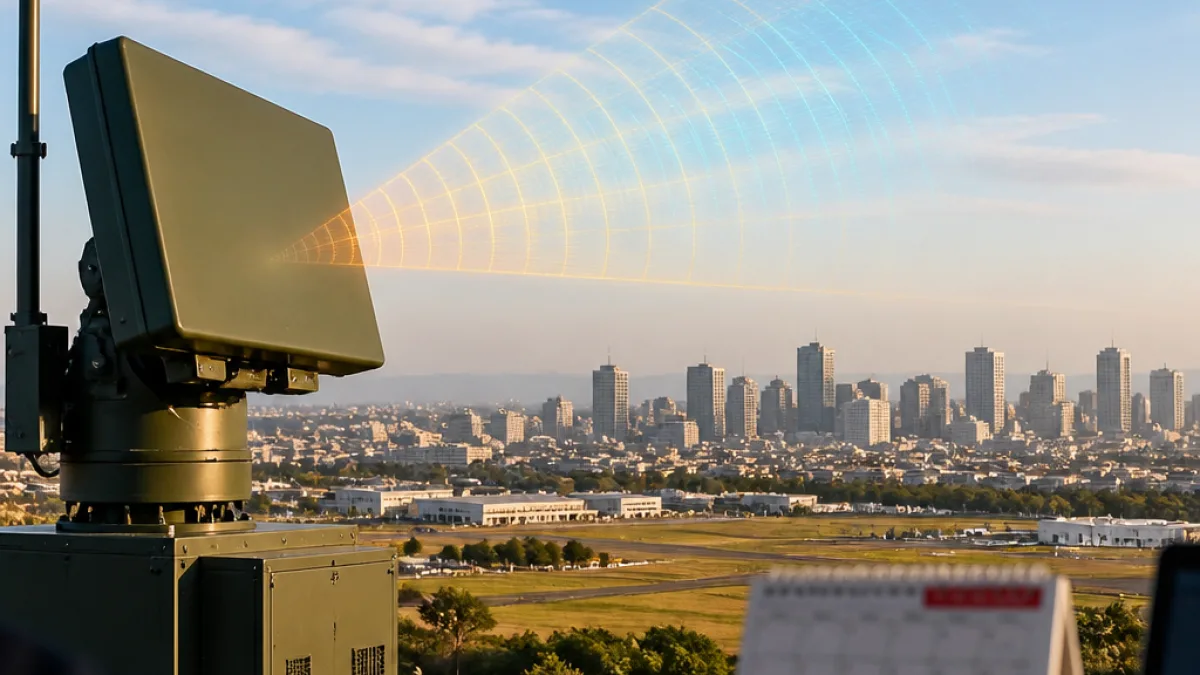
A second proposal would permit ground-based radar systems to operate in the 24.45–24.65 GHz band for drone detection and tracking. The FCC identified potential uses near airports, borders, prisons, stadiums and critical infrastructure.
The proposal follows the FCC’s earlier examination of restrictions on ground-based radar in that band. Existing rules have allowed certain airborne radar applications while limiting comparable ground-based systems used for surveillance. If adopted, the new framework would require ground-based systems to protect users that have priority access to the spectrum from harmful interference.
That condition would make the proposed authorization subject to interference protections rather than creating unrestricted access to the band. The FCC’s stated purpose is to address the spectrum needs of systems that identify and track drones from the ground, an area of growing importance for airport, public-safety and critical-infrastructure security.
Separate from the 800 MHz decision
The November 19 agenda follows a separate FCC initiative concerning drone communications in the 800 MHz Cellular band, which was scheduled for a vote on October 29. The 450 MHz and 24 GHz measures remain proposals until the commission completes its rulemaking process and adopts final text.
The planned vote therefore covers several distinct regulatory questions: how low-altitude aircraft can exchange safety-related data with ground stations, how radar operators can obtain spectrum for drone detection, and how satellite connectivity rules should be updated. The FCC has not stated in the announcement that any of those November proposals will take effect immediately after the vote.