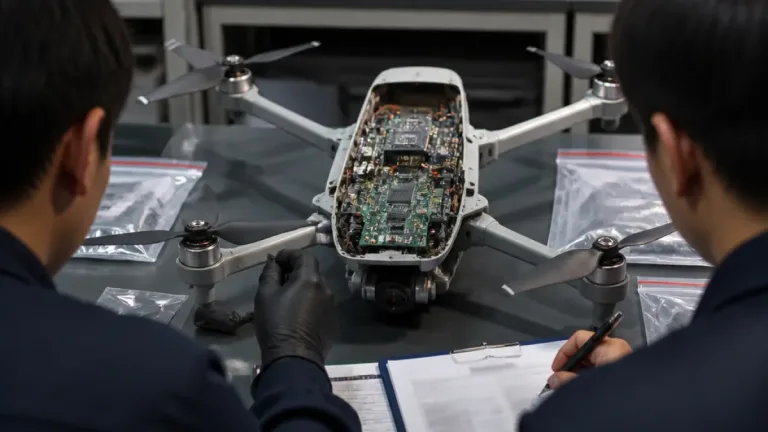
Elistair has introduced a tethered module for Parrot’s ANAFI UKR, a small unmanned aircraft intended for defense and public-safety users. The system supplies continuous power from the ground through a micro-tether, allowing the drone to remain airborne for hours without landing to replace its battery, according to the company.
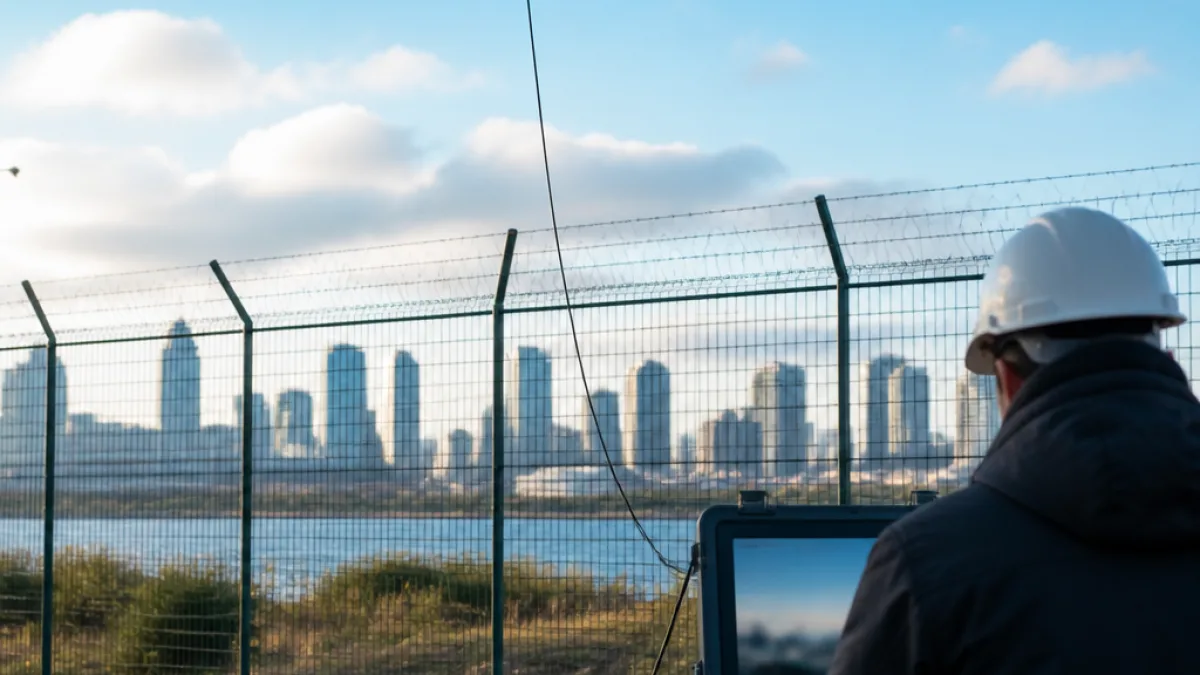
The integration is aimed at missions that require an aerial view to remain in place rather than being interrupted by repeated battery-powered sorties. Elistair identified force protection, border and perimeter surveillance, event security and emergency response as intended uses. The arrangement combines the portability of the ANAFI UKR with the persistent operating model of a ground-powered tethered aircraft.
Continuous power through a ground station
The tether connects the ANAFI UKR to one of Elistair’s Ligh-T or Safe-T tether stations. Power is delivered to the aircraft while it is in flight, removing the need for operators to bring the drone down for battery changes during an observation task. That can make the system suitable for situations where maintaining coverage over a defined area is more important than moving frequently between locations.
| Manufacturer | Aircraft | Power system | Claimed setup time | Intended missions |
|---|---|---|---|---|
| Elistair | Parrot ANAFI UKR | Micro-tether linked to Ligh-T or Safe-T station | Under two minutes | Surveillance, security and emergency response |
Elistair said the complete setup can be prepared for flight in under two minutes. The company presented that deployment time as a way to retain the small drone’s field portability while adding the endurance associated with tethered systems. The aircraft remains connected to the ground station during the mission, rather than operating as a conventional battery-only platform.
“With this new solution, we bring the endurance of tethered operations to a drone that our defense and public safety customers already trust,” said Guilhem de Marliave, CEO of Elistair.
Parrot also described the integration as an expansion of the ANAFI UKR’s surveillance role. Chris Roberts, Parrot’s Senior Vice President and Chief Revenue Officer, said the configuration preserves the aircraft’s portability, ease of deployment and secure architecture while extending its surveillance capabilities.
Where the system fits
Tethered drones are generally used when an operator needs a persistent overhead position, such as monitoring a perimeter, protecting a force or supporting an emergency operation. The tether can provide power for longer observation periods than a standalone battery allows, but it also links the aircraft to a ground position and limits how far it can move from that station. Elistair’s announcement focuses on that fixed-area surveillance role for the ANAFI UKR rather than on long-distance flight.
- Aircraft: Parrot ANAFI UKR
- Endurance approach: Continuous ground power through a micro-tether
- Ground equipment: Elistair Ligh-T or Safe-T tether stations
- Deployment claim: Ready for flight in under two minutes
- Target users: Defense and public-safety teams
The announcement adds a persistent-surveillance option to a micro-drone platform without describing a change to the aircraft’s basic role. For operators that need portable equipment at the start of a mission and sustained coverage after deployment, Elistair’s module is designed to bridge those two requirements. The company did not announce a price or a commercial availability date in the details provided.