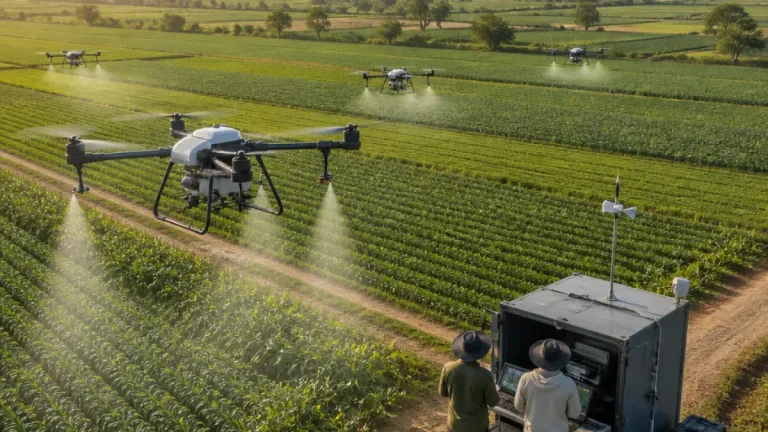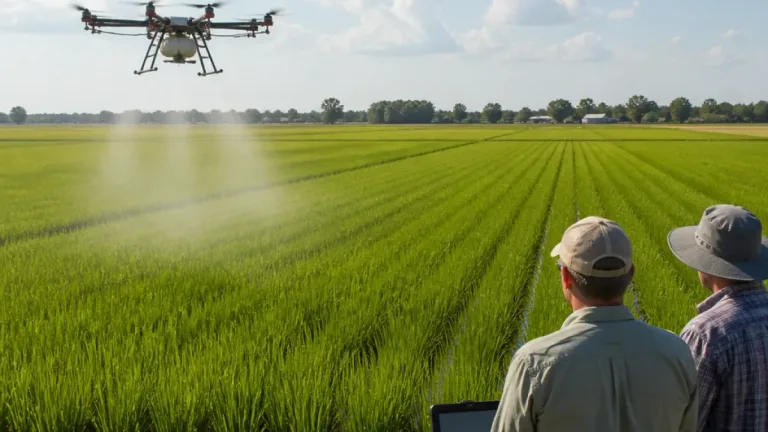
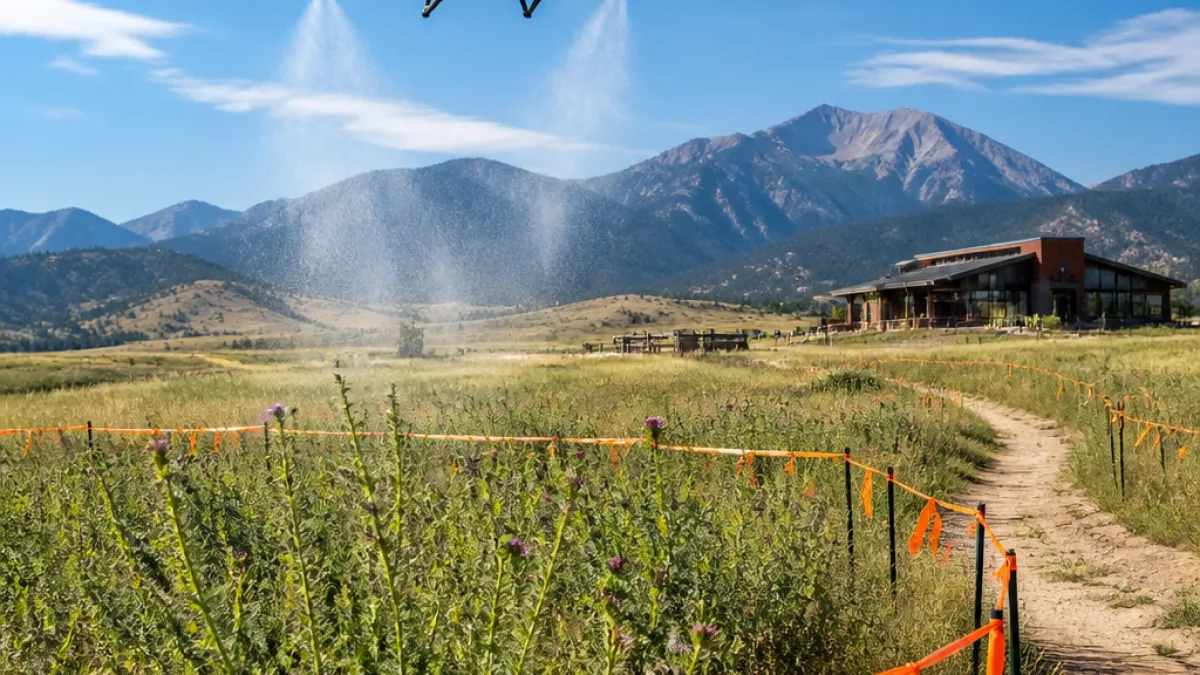
The City of Longmont, Colorado, has scheduled a drone-based herbicide application on municipal land near Sandstone Ranch, in an operation planned to run from October 28 through October 31, 2026. The work is intended to control noxious weeds on property that is closed to the public.
Drone work planned for city property
According to a public notice issued by Longmont, a contractor will carry out the treatment under the supervision of the city’s Ecosystem Management program. Drone flights are scheduled during daylight hours. The treatment area lies northeast of Peschel Open Space and southwest of the Sandstone Ranch Visitors Center.
The city’s notice identifies the purpose of the operation as applying herbicide to unwanted vegetation. Under Colorado’s noxious weed laws, the term covers invasive or otherwise harmful plants that may require management. Such species can compete with native plants, affect agricultural land and alter natural ecosystems.
| Operation detail | Information provided by Longmont |
|---|---|
| Location | City property near Sandstone Ranch |
| Work area | Northeast of Peschel Open Space and southwest of the Sandstone Ranch Visitors Center |
| Timing | October 28-31, during daylight hours |
| Operator | A contractor supervised by the city’s Ecosystem Management program |
| Purpose | Control of noxious weeds |
What the notice does and does not identify
Longmont’s announcement does not name the herbicide product, the weed species being targeted, the total area to be treated or the quantity of chemical expected to be applied. Those details are material to assessing the treatment’s environmental profile and any product-specific precautions.
The notice also does not provide information about the aircraft or application equipment. Drone spraying generally allows vegetation managers to treat an area from above instead of sending workers across the site on foot or using ground vehicles. The operational and environmental results, however, depend on the equipment, the chemical selected, the treatment plan and weather conditions.
Part of a broader weed-management toolbox
Herbicide application is one of several methods available to land managers. Other approaches include mechanical removal, grazing and biological controls. The appropriate combination depends on the plants involved, site conditions and the management objectives for the property.
Because the Sandstone Ranch property is not open to the public, the planned closure reduces public access to the treatment area while the work is underway. The city’s notice establishes when and where the drone activity is scheduled, but does not disclose follow-up measurements of treated acreage, chemical use or weed-control results.