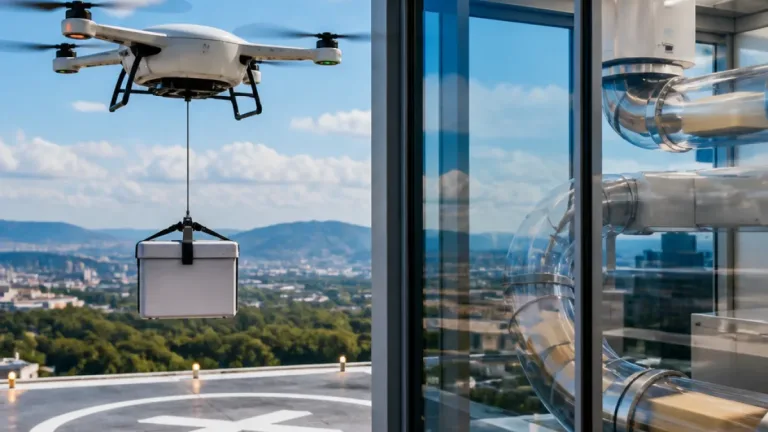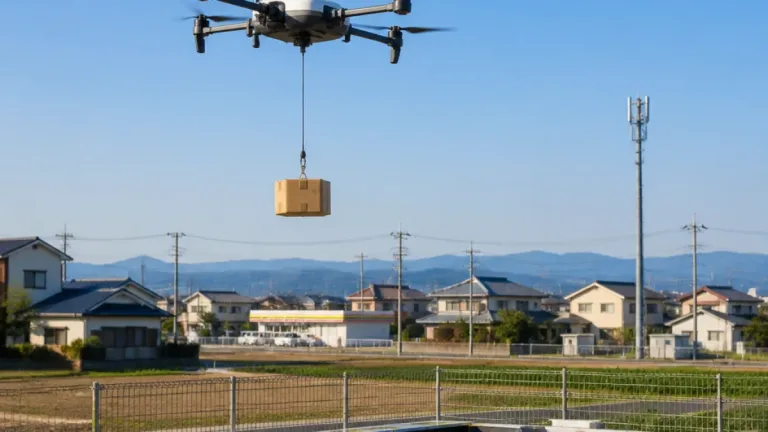
Zipline delivered more than 1.8 million vaccine doses in Nigeria’s Bayelsa state between 2024 and 2026, according to figures presented by the state government at a health workshop in Yenagoa on Thursday, October 29.
The program served 150 health facilities and established 127 community drop sites, according to Prof. Seiyefa Brisibe, Bayelsa’s Commissioner for Health. The network covered all eight of the state’s local government areas: Brass, Ekeremor, Kolokuma/Opokuma, Nembe, Ogbia, Sagbama, Southern Ijaw and Yenagoa.
Drone logistics for riverine communities
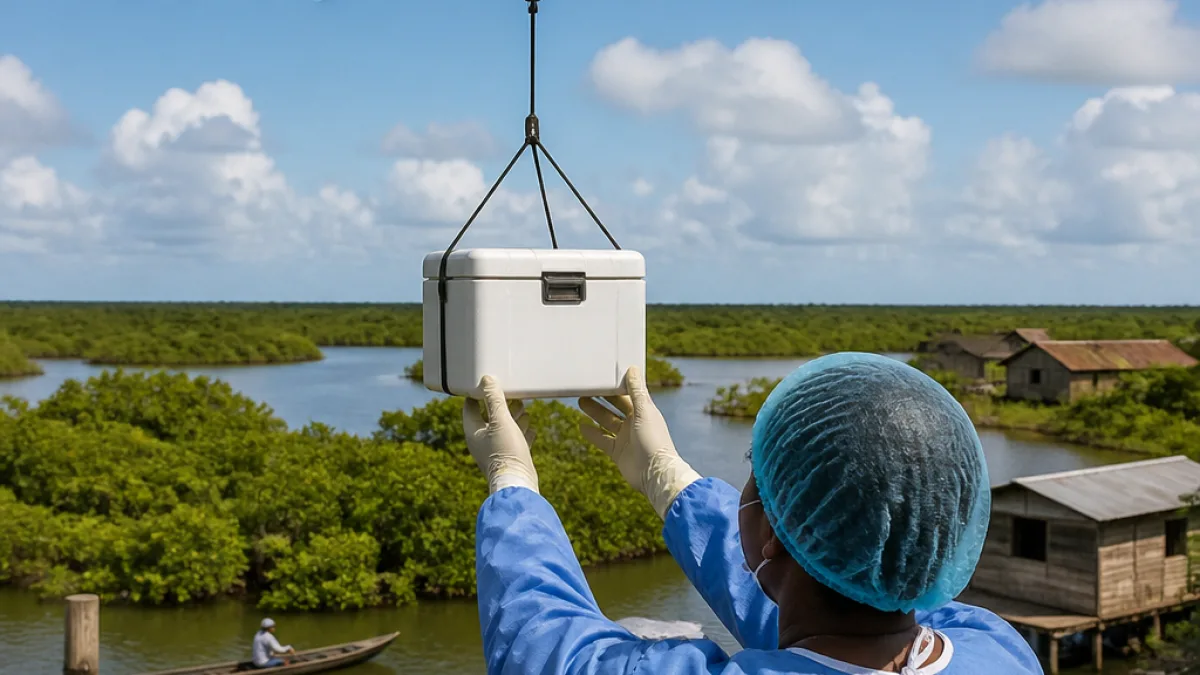
Bayelsa’s geography is a central reason for using an aerial delivery network. The state includes extensive waterways and dense marshlands, which the government said have historically made conventional transport of medical supplies difficult. Those logistical barriers contributed to missed vaccinations and delayed treatments in remote communities, according to Brisibe.
Under the arrangement, health workers can request vaccines and other essential supplies when they are needed. Zipline then uses its logistics network to move the material to designated drop sites, where local health workers and community programs support distribution to patients and families.
- More than 1.8 million: vaccine doses delivered between 2024 and 2026
- 150: health facilities served
- 127: community drop sites established
- Eight: Bayelsa local government areas covered
Combining aerial delivery with public-health operations
The initiative was carried out by the Bayelsa Ministry of Health and the State Primary Health Care Board in partnership with Zipline through the Zero-Dose and Multi-Deprivation Programme. The program targets “zero-dose” children, meaning children who have never received routine vaccinations, while also supporting wider access to essential healthcare.
Bayelsa officials said the program combines Zipline’s centralized warehousing, inventory management, digital tracking and on-demand delivery with government-led community mobilization. That operating model places the aircraft within a broader medical-supply chain rather than treating drone flights as a standalone transport service.
Funding came from Gavi, Pfizer and the ELMA Foundation, with support from Urban Primary Sampling Units. The state government said the network also supported community-based healthcare services aimed at addressing challenges affecting remote populations.
For medical logistics operators, the Bayelsa deployment illustrates how drone delivery can be paired with fixed health facilities and community distribution points. The reported delivery total also provides a measure of sustained use over multiple years, rather than a single demonstration or limited pilot. The figures were presented by the Bayelsa government as part of its review of efforts to expand immunization and reach children who remain outside routine vaccination services.