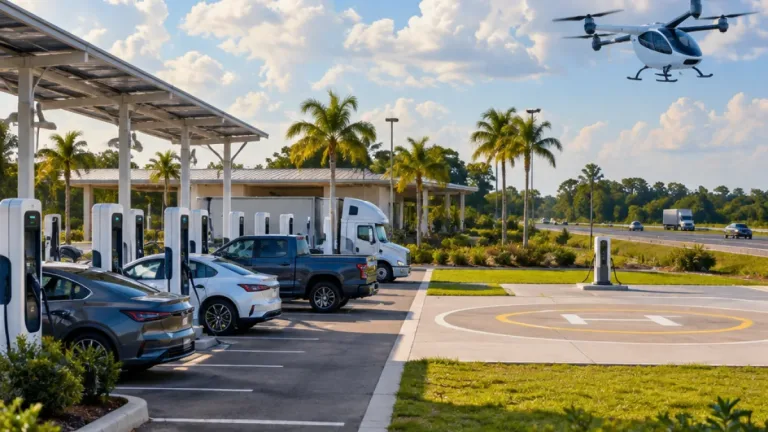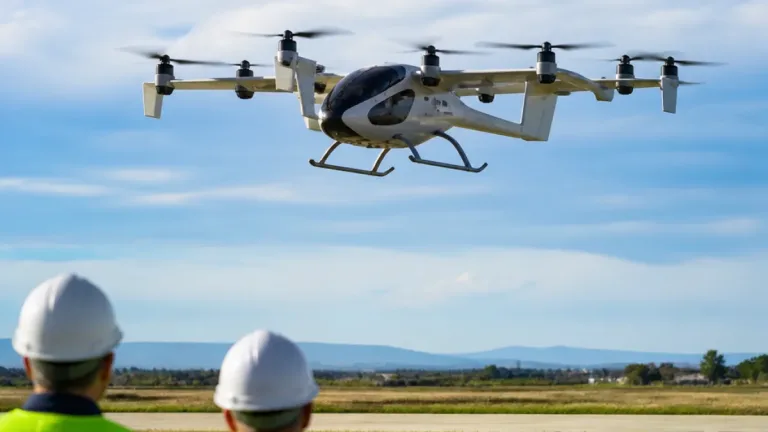
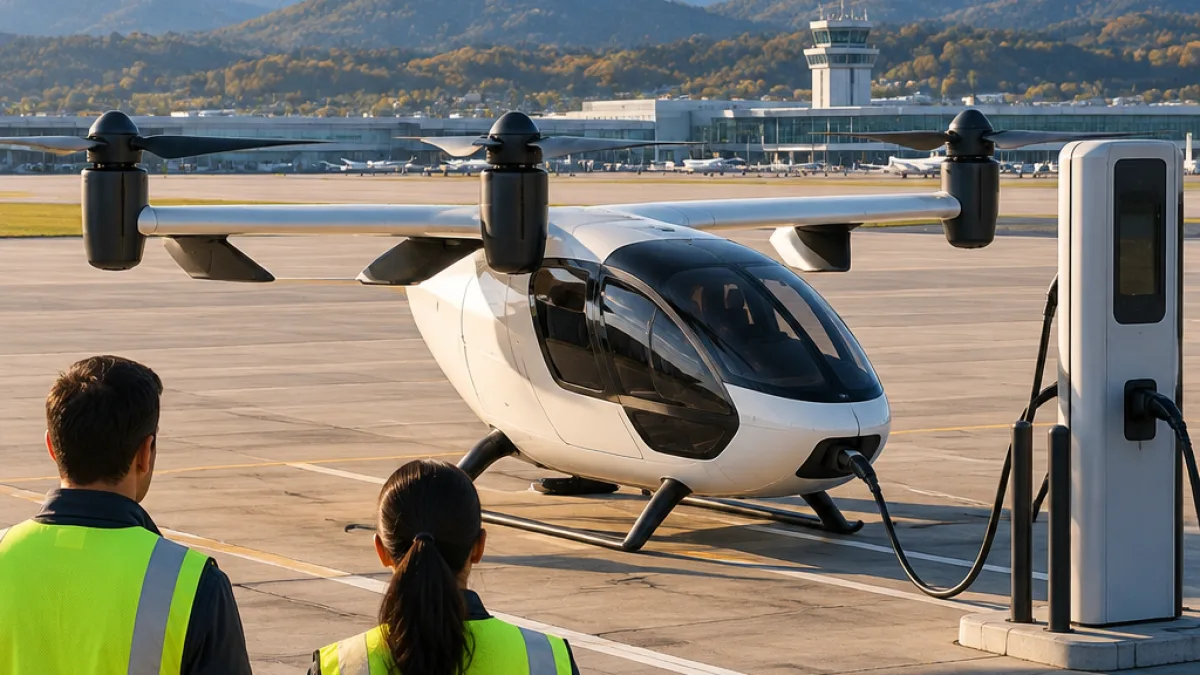
West Virginia International Yeager Airport has unveiled an electric aircraft charging station in partnership with BETA Technologies and the Marshall University Bill Noe Flight School, adding eVTOL infrastructure at the state’s busiest airport.
The station was developed by Vermont-based BETA Technologies, according to Yeager Airport Director and CEO Dominique Ranieri. The facility is intended to provide a place for electric aircraft to recharge while supporting further development of the technology in the airport’s airspace.
A facility for future electric aircraft operations
Ranieri said the airport wanted to establish infrastructure before electric aircraft are approved for passenger and cargo transportation. The announcement concerns the charging installation itself; it does not represent an approval for commercial eVTOL passenger service at Yeager Airport.
“That now means that CRW has the charging infrastructure for those aircraft to come and be able to charge — how they fuel — here at the airport and allow them to use our airspace for further development. and use of that technology,” Ranieri told 580 WCHS.
Yeager Airport said the installation is designed to support aircraft developed by BETA Technologies. The manufacturer is working on multiple applications for its electric vertical takeoff and landing aircraft, as well as aircraft capable of conventional or traditional takeoff and landing.
According to Ranieri, BETA representatives attended the ribbon-cutting event, and one of the company’s aircraft was present. The extracted announcement does not identify the aircraft model or provide technical specifications for the charger, such as its output, charging time or compatibility limits.
Flight-school role
The Bill Noe Flight School is expected to provide a training pathway for students learning to operate the emerging technology. That gives the project two linked components: airport infrastructure for electric aircraft and an educational partner intended to help develop pilots familiar with the new category.
Ranieri described electric aviation as an emerging part of the industry and said the airport wanted to participate at an early stage. Her stated objectives include positioning Yeager to offer passenger and cargo services if the aircraft receive the necessary approvals.
- Location: West Virginia International Yeager Airport in Charleston, West Virginia
- Partners: BETA Technologies and Marshall University’s Bill Noe Flight School
- Infrastructure: An electric aircraft charging station for eVTOL and other electric aircraft
- Current status: The station has been unveiled; passenger and cargo operations remain subject to future aircraft approvals
The project places charging infrastructure at an airport that could eventually serve electric aircraft alongside conventional aviation. For now, the confirmed milestone is the installation and unveiling of the station, while BETA Technologies continues developing the aircraft that could use it.