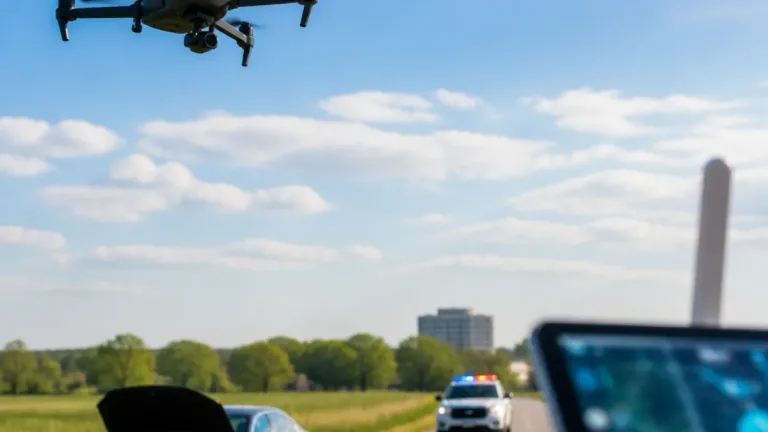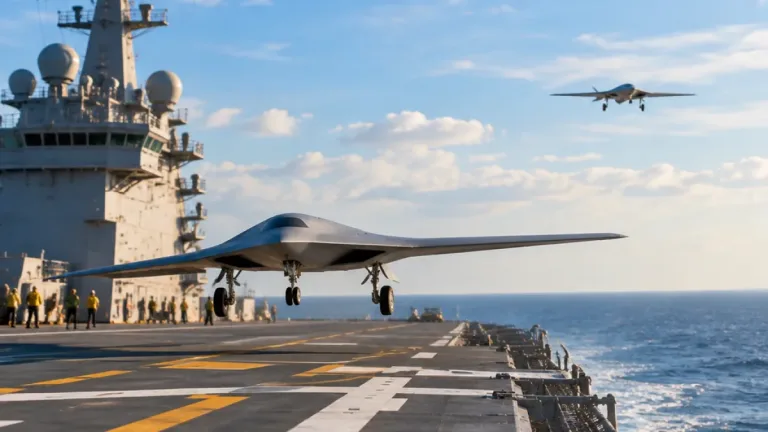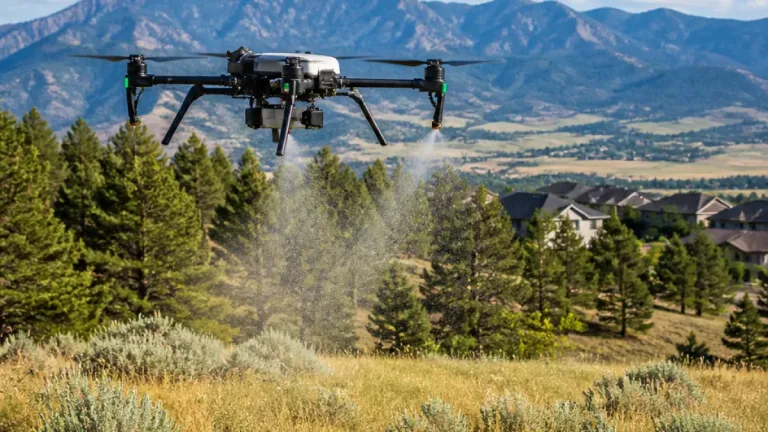
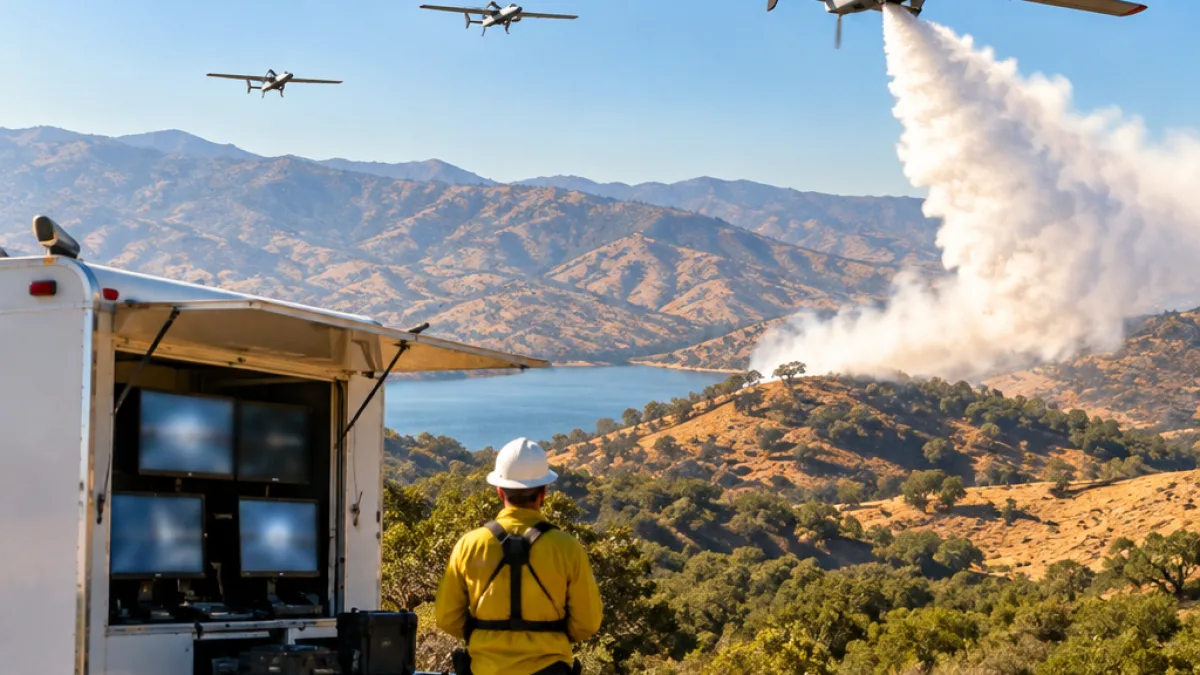
San Bernardino County Fire Protection District has signed a contract for five AI-powered autonomous firefighting aircraft, establishing what the district says is the first California fire department training with and flying this type of system.
The agreement with California-based Seneca is intended to create an unmanned strike team that can reach a new fire start in five to 10 minutes or less and deliver more than 500 gallons of finished foam. Training is scheduled to begin before the aircraft arrive in the first and second quarters of 2027, ahead of the county’s peak fire season.
A coordinated response from one pilot
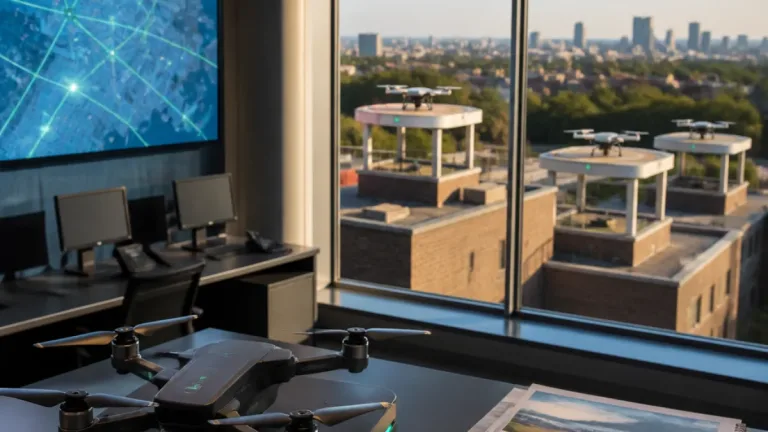
The contract includes five aircraft, a towable Mobile Air Operations Base and access to Seneca’s autonomy software, according to details reported from the district’s announcement. The onboard system is designed to let the aircraft navigate and coordinate with one another, allowing a single San Bernardino County Fire pilot to operate multiple aircraft at the same time, including over difficult terrain.
The aircraft are also intended to work at night using onboard sensors. That capability is relevant to wildfire operations because some crewed aerial resources cannot fly after dark. The district says many wildland fires begin in areas that ground crews cannot reach quickly, and the new strike team is designed to launch from virtually anywhere to help close that response gap.
| Program element | Details reported |
|---|---|
| Operator | San Bernardino County Fire Protection District |
| Supplier | Seneca |
| Aircraft | Five autonomous firefighting aircraft |
| Planned delivery | First and second quarters of 2027 |
| Included support | Mobile Air Operations Base and autonomy software |
Beyond the initial attack
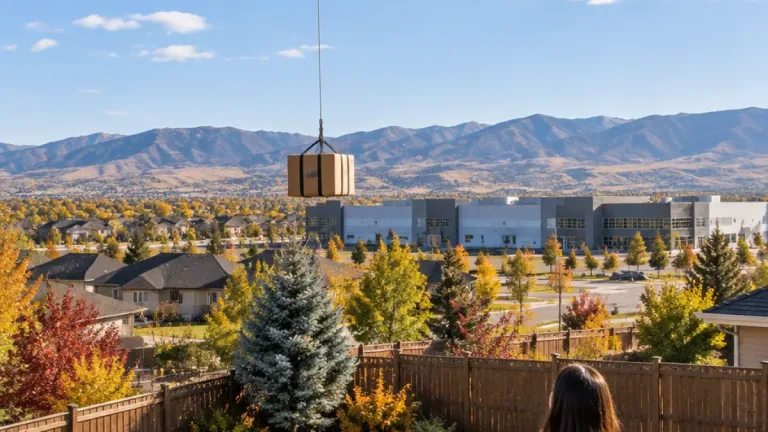
The aircraft are not limited to the first response. The district plans to use them to establish suppressant or retardant perimeters around structures and vegetation before an advancing fire front reaches those areas. They are also intended to help suppress remaining hot spots during mop-up operations.
According to the announcement, those tasks could reduce firefighters’ exposure to toxic materials while allowing crews to remain available for other incidents. The aircraft’s role will therefore span rapid reconnaissance and initial suppression as well as support work after the main fire front has moved through.
San Bernardino County Fire Protection District covers more than 2 million residents across a 20,000-square-mile service area. Its responsibilities range from structure fires and medical calls in urban areas to wildland fires across a large and varied territory. The district has an authorized staffing level of more than 1,100 full-time positions, according to the announcement.
- Training is planned before aircraft delivery in the first and second quarters of 2027.
- The strike team is expected to support rapid wildfire response, perimeter protection and hot-spot suppression.
- A single district pilot is intended to coordinate multiple aircraft through Seneca’s autonomy software.