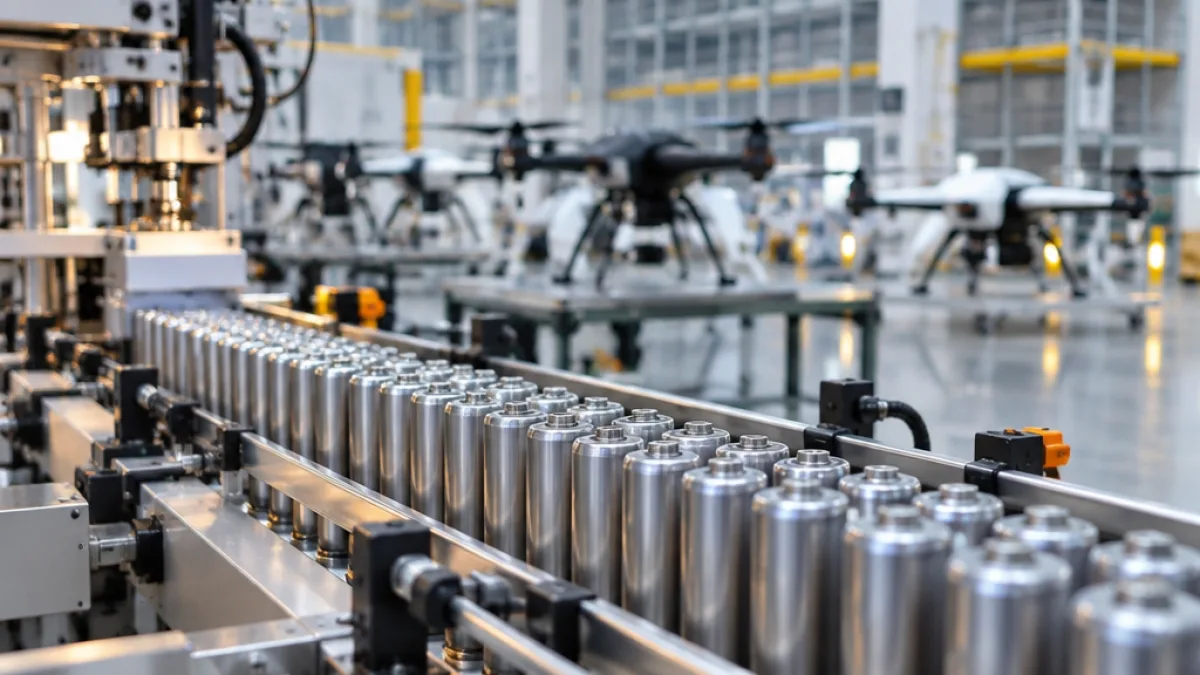
SES AI has completed the initial production ramp at its Chungju, South Korea, facility and is preparing to expand annual capacity for NDAA-compliant drone cells from 1 million to 3 million. The battery company outlined the plans during its third-quarter earnings call, while also reporting that it remains unprofitable and that production costs and yields still need to improve.
The Chungju line began producing and delivering cells in early October, according to SES AI. The facility has also received ISO 9000 certification for its NDAA-compliant production. SES AI said the installed capacity is currently 1 million cells per year, providing a manufacturing base for drone companies and pack integrators seeking components that comply with U.S. defense procurement requirements.
Pipeline includes more than 50 drone makers
SES AI said its NDAA cell pipeline now includes more than 50 drone makers and pack integrators. Approximately half a dozen customers have audited the Chungju production line, while discussions with potential customers indicate demand could exceed 3 million compliant cells annually.
The company is already shipping cells to about half a dozen participants in the Drone Dominance program’s Gauntlet Challenge. Orders from those customers range from several thousand to tens of thousands of cells. SES AI said it received orders in October and November from several Gauntlet Challenge participants and winners, and expects those orders, together with seasonal demand from energy storage, to support fourth-quarter revenue.
| Item | Status or target |
|---|---|
| Current Chungju installed capacity | 1 million NDAA-compliant drone cells annually |
| Planned staged expansion | 3 million cells annually |
| Expansion capital | About $5 million |
| Target for added capacity | End of the second quarter of 2027 |
| 2027 qualified-cell output target | At least 1 million and possibly 1.5 million cells |
Expansion depends on converting demand into shipments
SES AI said the Korean expansion will use a higher-speed production line and require about $5 million in incremental capital. The company is targeting the end of the second quarter of 2027 for the additional capacity. For the full year 2027, management expects to deliver at least 1 million and possibly 1.5 million qualified NDAA-compliant cells to customers.
Those targets are tied to SES AI’s effort to turn its customer pipeline into larger commercial shipments. The company’s current orders are still described in ranges rather than as a disclosed aggregate volume, and the planned expansion is staged rather than presented as completed capacity.
- Chungju production and deliveries began in early October.
- More than 50 drone makers and pack integrators are in SES AI’s NDAA cell pipeline.
- SES AI remains unprofitable, with weaker gross margin and lower cash after a buyback.
The earnings update also highlighted constraints alongside the growth plans. SES AI said it remains unprofitable, gross margin weakened sharply, and cash declined following a buyback. Management identified drone production costs and yields as areas requiring further improvement, creating execution requirements as the company moves from initial production to higher-volume deliveries.
For U.S. drone manufacturers and defense customers, the Chungju program is positioned by SES AI as a source of compliant cells rather than simply a broader battery expansion. The company’s stated capacity and output goals remain forward-looking targets, while customer demand beyond current orders will need to translate into qualified shipments before the larger production plan is realized.