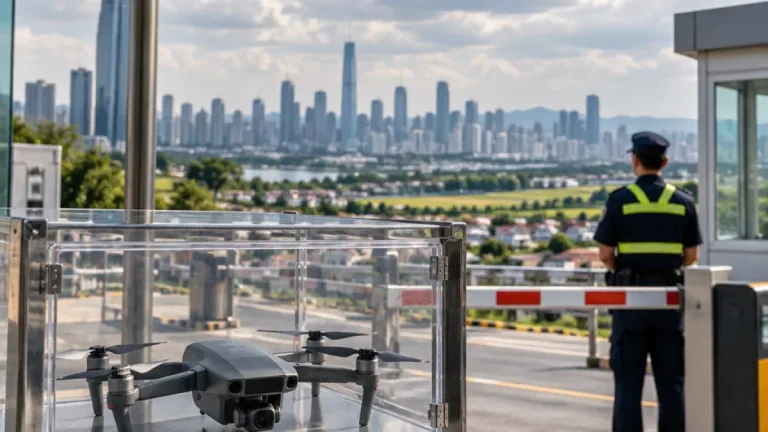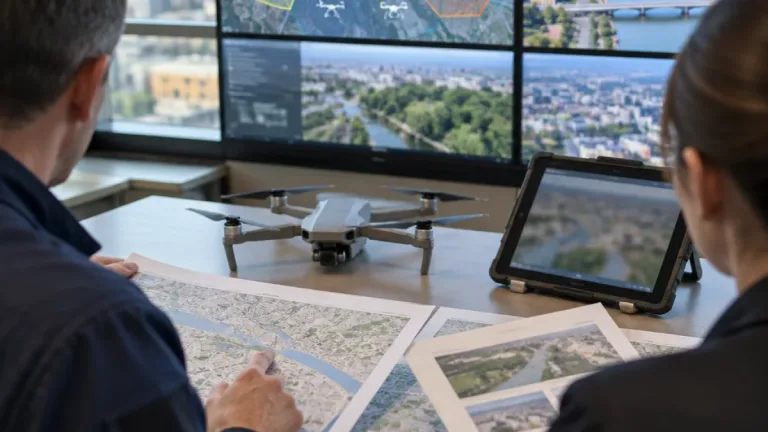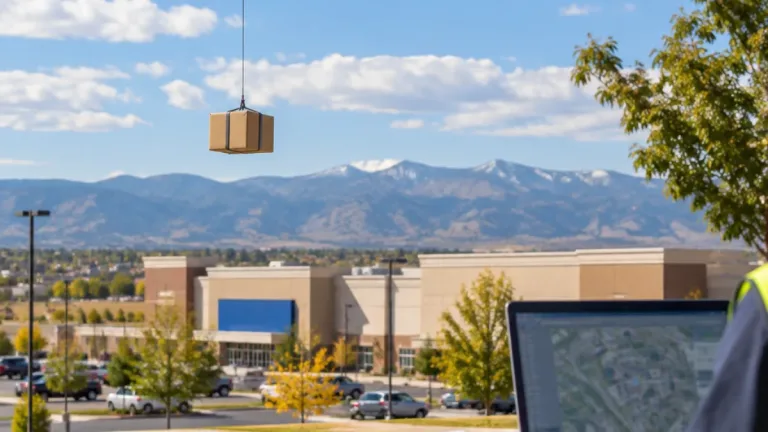
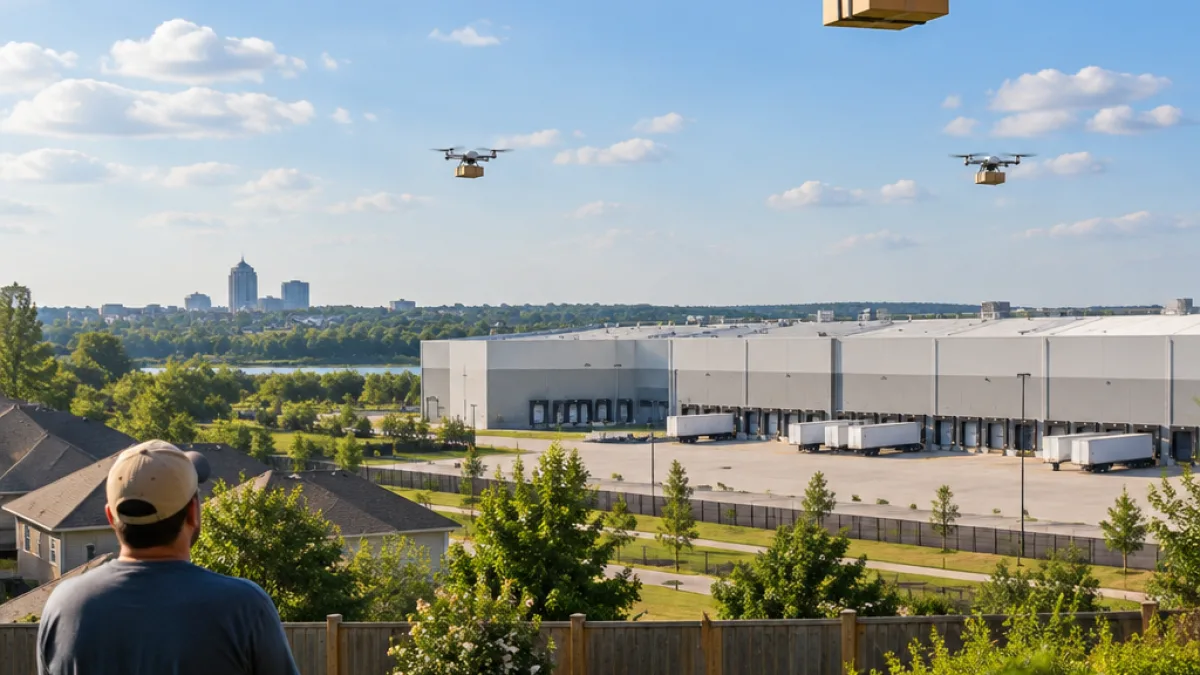
Amazon Prime Air’s drone deliveries in Baton Rouge, Louisiana, are exposing a recurring divide between federally managed airspace and local concerns about noise and privacy. One resident told WBRZ they counted 18 overflights in 21 minutes, or approximately one flight every 70 seconds. The flights serve customers within an approximately 7.5-mile radius of Amazon’s Baton Rouge fulfillment center.
The operation uses Amazon’s MK30 drones under FAA authorization for autonomous, beyond-visual-line-of-sight flights. Amazon representatives said outbound aircraft generally travel at approximately 200 to 250 feet before descending near a delivery address. Return flights, they said, use routes at approximately 300 to 350 feet.
Residents report persistent noise
Some Baton Rouge residents said they saw flights they believed were lower than the altitudes described by Amazon. The reporting by WBRZ and IEEE Spectrum did not identify an independent measurement confirming either the residents’ observations or Amazon’s stated flight profiles.
Amazon told WBRZ that its own noise sampling during one Baton Rouge delivery recorded approximately 68 decibels at a nearby backyard. That measurement came from Amazon; the methodology and operating conditions were not supplied in the reporting. Residents described the sound as resembling a weed whacker or leaf blower and said the repeated noise was disruptive enough to drive them indoors, according to IEEE Spectrum.
| Reported operating detail | Figure or status |
|---|---|
| Aircraft | Amazon MK30 |
| Service area | Approximately 7.5-mile radius |
| Outbound route altitude | Approximately 200 to 250 feet, according to Amazon representatives |
| Return route altitude | Approximately 300 to 350 feet, according to Amazon representatives |
| Amazon noise measurement | Approximately 68 decibels at a nearby backyard |
Local authority is limited
When residents asked local officials to intervene, parish attorneys confirmed that the city-parish lacked authority over the drones’ altitude while Amazon operated within FAA parameters. That places the immediate regulatory question at the federal level rather than with local officials responding to neighborhood complaints.
The distinction matters because FAA environmental decisions cited in the reporting do not automatically cover every Prime Air location. The FAA completed an environmental review for an Amazon Prime Air proposal in Florida and issued a Finding of No Significant Impact for that Florida operation. That decision was specific to the Florida proposal and did not apply to Baton Rouge.
A separate FAA assessment concluded that the short duration of individual drone visibility and the broad distribution of flights would minimize significant visual effects. Those assessments address defined environmental measures; they were not designed to measure the cumulative experience of residents exposed to frequent flights over a neighborhood.
A question for expanding BVLOS operations
The Baton Rouge complaints illustrate the practical consequences of routine autonomous BVLOS operations even when flights are authorized under federal rules. For residents, the issue is not a single aircraft but the frequency of repeated deliveries and return trips. For local government, the issue is the limited ability to set or enforce altitude requirements when the operation falls within an FAA authorization.
- Amazon’s position: MK30 outbound and return flights use the approximate altitude bands described by company representatives, and Amazon recorded approximately 68 decibels during one delivery.
- Residents’ position: Some reported lower-looking flights and persistent noise comparable to a weed whacker or leaf blower.
- Regulatory position: Parish attorneys said local officials could not regulate altitude while the operation remained within FAA parameters.
The reported dispute does not establish that Amazon violated its authorization or that the aircraft were operating below approved altitudes. It does show how an FAA-approved delivery network can create localized noise and privacy concerns that are difficult for city and parish officials to address directly.