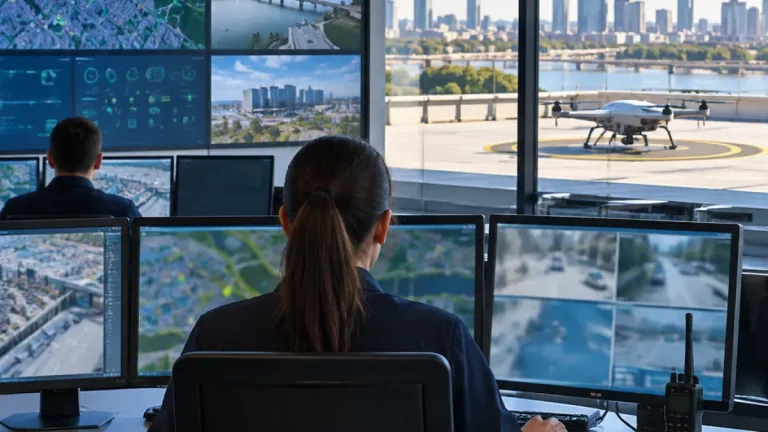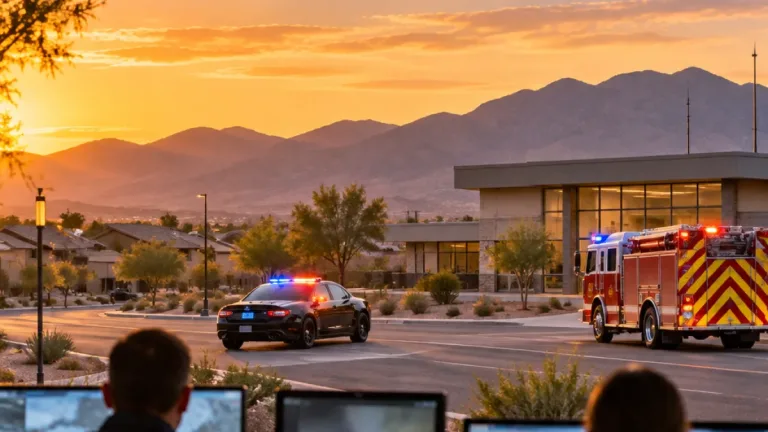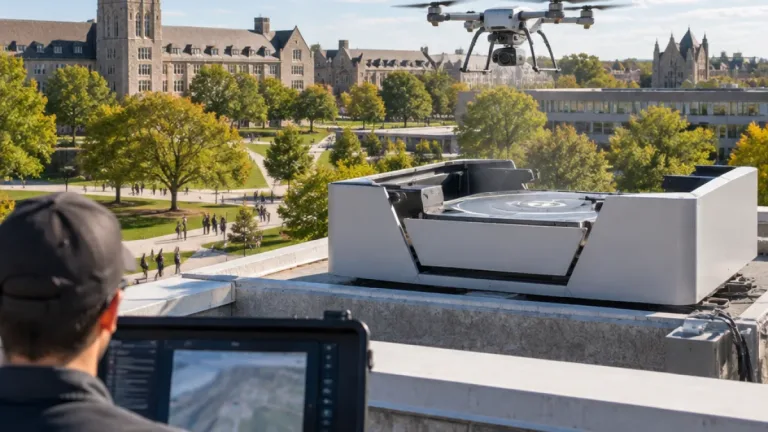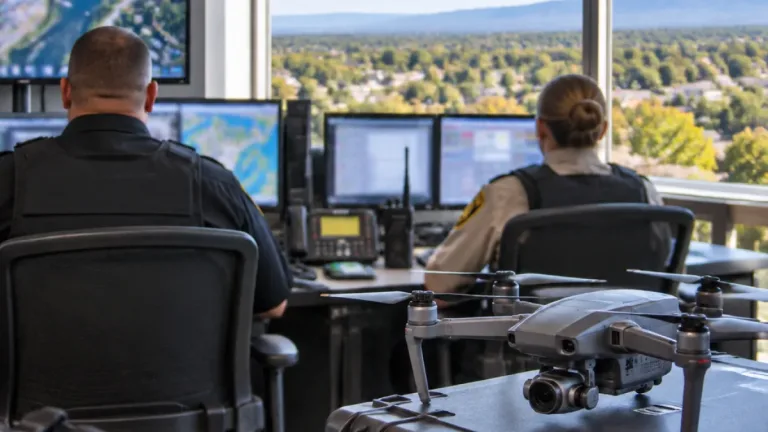
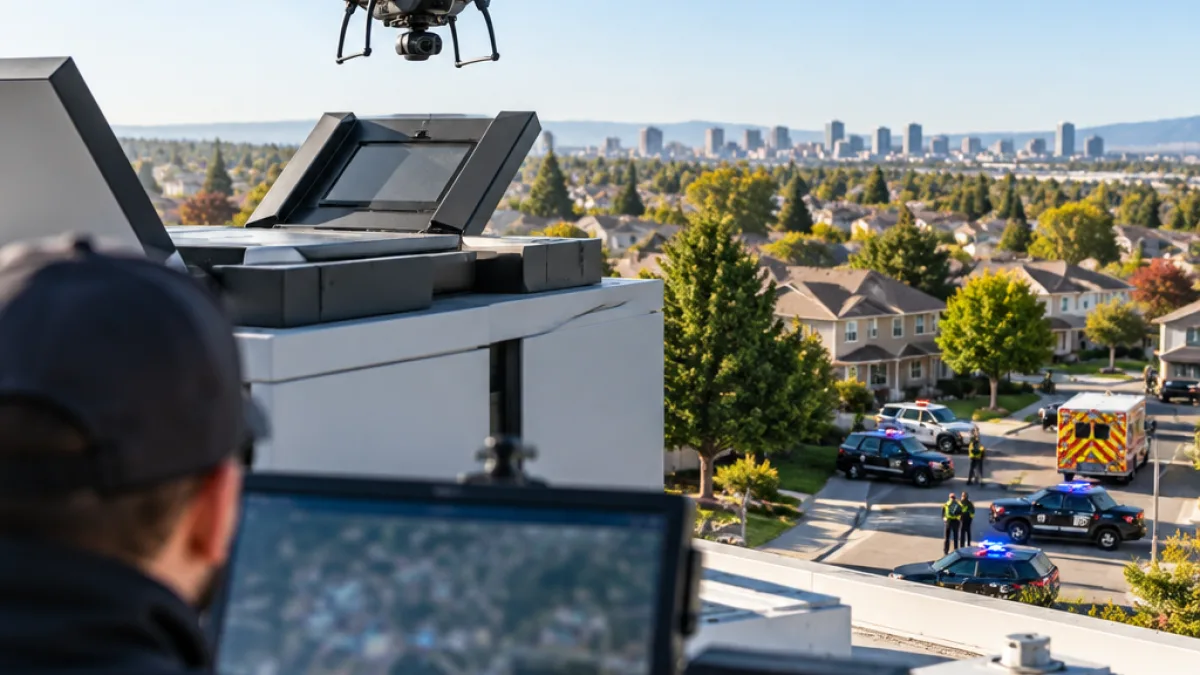
Henderson police are preparing to launch a Drone as First Responder program that would dispatch aircraft to selected emergency calls before patrol officers or firefighters arrive. The department says the system is intended to give responders an early view of unfolding incidents, particularly when road traffic could delay ground units.
Pilot produced faster aerial response
During a 30-day pilot this spring, Henderson police reported that the drones reached the scene first in approximately 70% of deployments. The department also said the aircraft helped clear officers from about 16% of calls that were ultimately determined to be false alarms.
Chief Reggie Rader said the aerial feed can provide information to personnel traveling to emergencies and help them assess conditions before entering a potentially dangerous location. Police cited situations such as attempted carjackings and home invasions as examples in which an early view could help responding officers understand what they are approaching.
“It can be first on scene. It can provide that intelligence. It can keep our officers from showing up in an ambush situation,” Chief Reggie Rader said.
Department sets limits on deployments
Henderson police said the aircraft will not be used for broad neighborhood monitoring. Instead, launches will be tied to specific calls for service. The department also said the camera will stay aimed at the horizon while the drone travels to the incident, rather than pointing down toward the community during that part of the flight.
- Deployments will be connected to defined emergency calls.
- The program is not intended for general neighborhood surveillance.
- The camera will remain pointed toward the horizon until the aircraft reaches the scene.
Those restrictions are part of the department’s stated operating framework as it moves from the pilot toward a broader launch. Once at the scene, the drone can provide an aerial view to personnel handling the call. Police described that capability as a way to support officer safety while reducing unnecessary responses to incidents that do not require a physical police presence.
Funding comes from grants and donations
Rader said a federal Homeland Security grant and money from a police foundation will help establish the system. Henderson police said that funding will allow the program to begin without using city tax dollars.
Rader characterized the program as a “force multiplier,” saying it could allow officers to spend less time responding to false alarms and more time on proactive patrols and community policing. The pilot results provide the department’s early measure of the system’s response value, while the stated call restrictions define how Henderson says the aircraft will be used once the program launches.