The Coimbatore Forest Division in India is preparing to create a dedicated fleet of AI-supported drones for wildlife monitoring and forest patrols, with an initial procurement plan for 12 aircraft. The project is intended to reduce the workload of frontline staff while expanding the division’s ability to observe animals and respond to movement across its forest ranges.
District Forest Officer N. Vengatesh Prabhu told The Hindu that the division is working to secure the drones through corporate social responsibility funding from sponsors. The proposed fleet would eventually be expanded so that each of the division’s seven forest ranges could receive two drones.
Planned capabilities
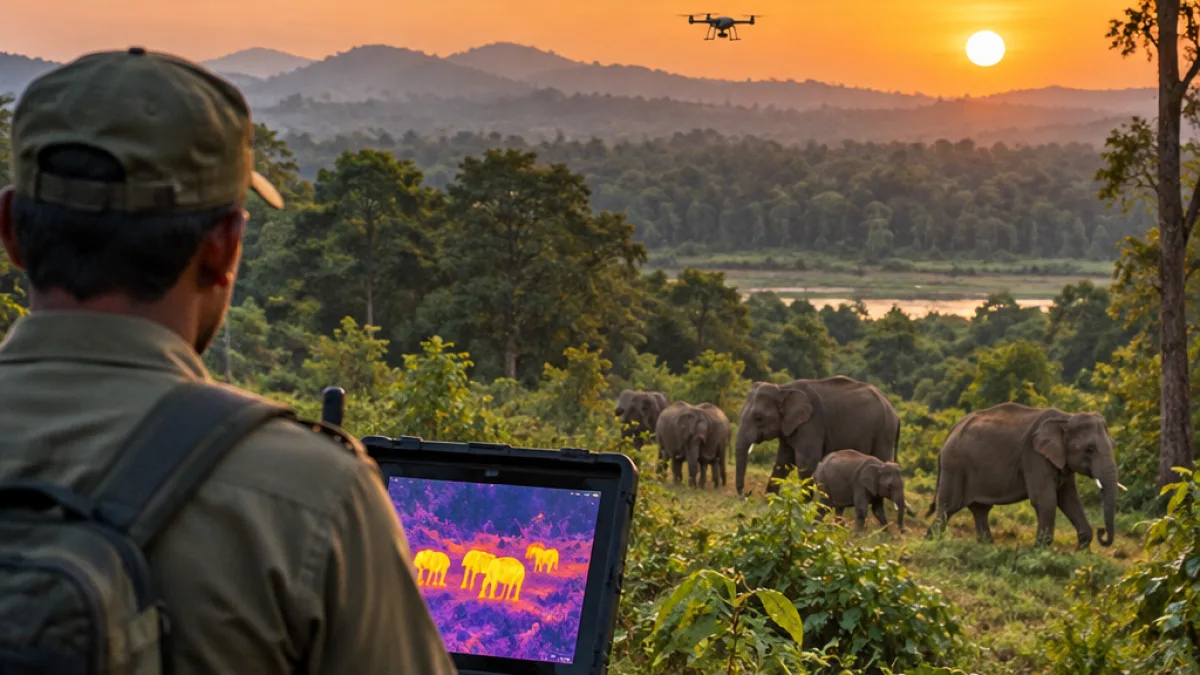
The aircraft are expected to combine several functions in a single platform. According to Prabhu, the drones will include cameras, speakers and thermal cameras, while their AI systems will be able to identify the number of elephants in a herd or detect other animals during surveillance from a distance.
The speaker system is intended to support operations involving elephants by allowing forest staff to alert people about animal movement. Thermal imaging would provide a way to locate animals at night, and the division expects the aircraft to support tracking and operations to drive elephants away when necessary.
“The AI-powered drones will also be able to auto-track an elephant or a herd when required,” N. Vengatesh Prabhu told The Hindu.
The proposed operating profile varies by terrain. The drones are expected to remain airborne for about 45 minutes in the plains and around 30 minutes in hilly areas. Each aircraft would be supplied with six batteries, with two batteries required at a time. The department is planning modifications to selected vehicles so staff can charge spare batteries while supporting field operations.
| Planned fleet detail | Figure or capability |
|---|---|
| Initial procurement | 12 drones |
| Forest ranges | Seven |
| Planned allocation | Two drones for each range as the fleet expands |
| Flight time in plains | About 45 minutes |
| Flight time in hilly areas | Around 30 minutes |
| Batteries per drone | Six supplied; two required at a time |
Building on existing use
The planned aircraft would replace or supplement the division’s current small-scale drone use. Existing drones are already being used for forest-fire detection, wildlife monitoring and operations involving ailing elephants. Forest Department staff used a drone to monitor an ailing elephant calf in the Madukkarai range in September, according to The Hindu.
The new platforms are expected to be lighter than drones previously procured by the division because many of their functions would be built in. That design would bring cameras, audio equipment, thermal sensing and automated tracking into a fleet intended for repeated field use rather than isolated aerial observation.
The proposal remains in the procurement stage, with financing efforts under way and no completed acquisition identified in the report. If the plan proceeds, the division’s forest ranges would gain a more standardized aerial-monitoring capability, combining daytime observation, nighttime detection and public alerts in a single operational program.