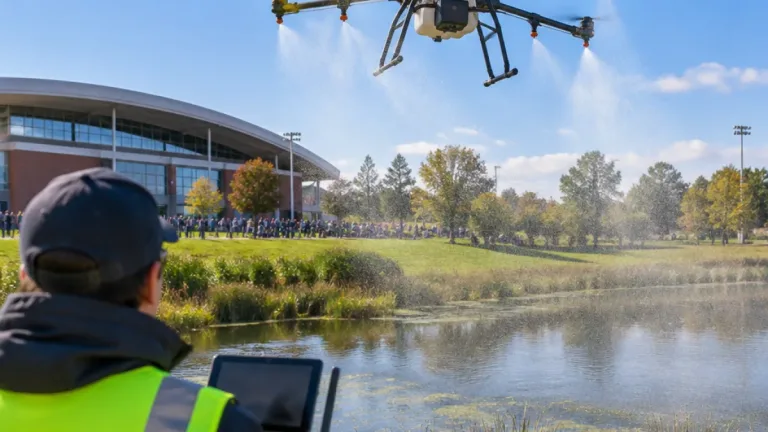
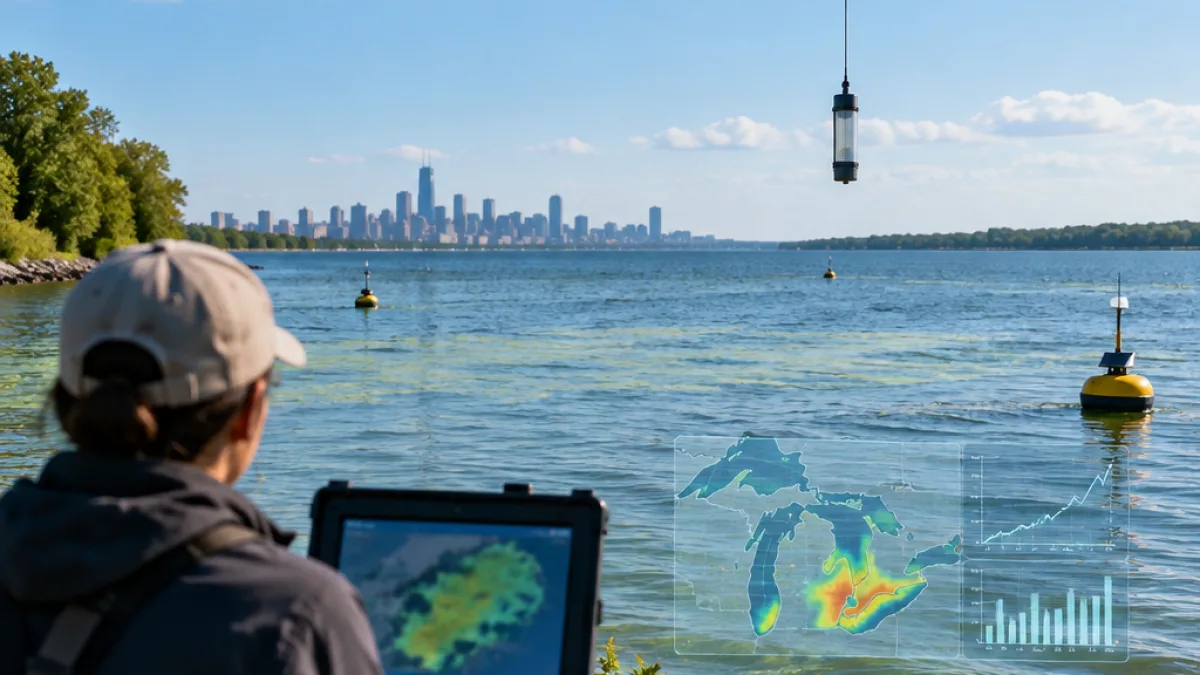
Michigan’s Department of Environment, Great Lakes, and Energy will work with Kohtari to test drone-enabled water monitoring and sampling under the state’s Advanced Air Mobility Statewide Challenge. The project is intended to examine whether aerial systems can provide more frequent, location-specific information for water-quality teams across Michigan’s Great Lakes region.
The demonstration will focus on the Grand River and beyond, combining drone operations with an artificial intelligence and machine learning platform. Kohtari said the platform will bring together environmental, operational and monitoring information that has previously been fragmented, with the aim of identifying where water risks are emerging and the factors contributing to them.
“This is not about simply collecting yet more water data. Covering such an important area in Michigan’s Great Lakes region, we can help make water quality monitoring faster, safer and far more incisive for those who need to make key decisions about the Grand River and beyond,” Kohtari CEO James Sumsion said.
Forecasting algal blooms
A central part of the project will be the use of the platform to predict potentially harmful algal blooms before they occur. The system will draw on live sensor information and other monitoring data, although the announcement does not provide a performance target or specify which sensors will be carried by the drones.
Kohtari said its system will collect live, location-tagged water-quality readings. That approach is designed to give state personnel more timely information about changing conditions instead of relying solely on less frequent or broader-area monitoring. The project description frames the technology as a way to support decisions by water-quality teams, rather than as a replacement for those teams.
Part of a wider state challenge
The Kohtari-EGLE demonstration is one of five projects receiving a combined $2 million through Michigan’s Statewide Challenge. The program is evaluating advanced aerial technologies in real-world public-sector applications. Detroit-based NextEnergy is also involved, working with innovators on solutions for communities and cities.
- Lead public agency: Michigan Department of Environment, Great Lakes, and Energy
- Technology provider: Kohtari
- Primary area: Michigan’s Great Lakes region, including the Grand River
- Planned capability: Drone-based monitoring, sampling and water-quality intelligence
- Additional objective: Forecasting potentially harmful algal blooms
Specialized drone operations will receive support from additional industry partners, according to the project announcement. The demonstration will therefore test more than airborne data collection: it will also examine how aerial measurements, live sensor feeds and existing environmental records can be combined for public-sector water management.