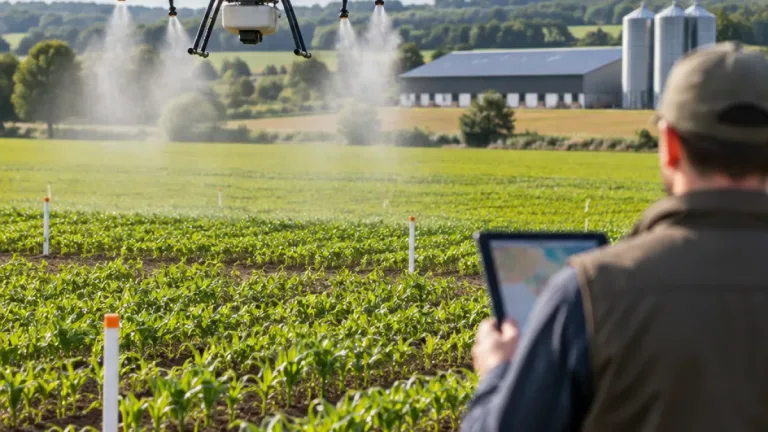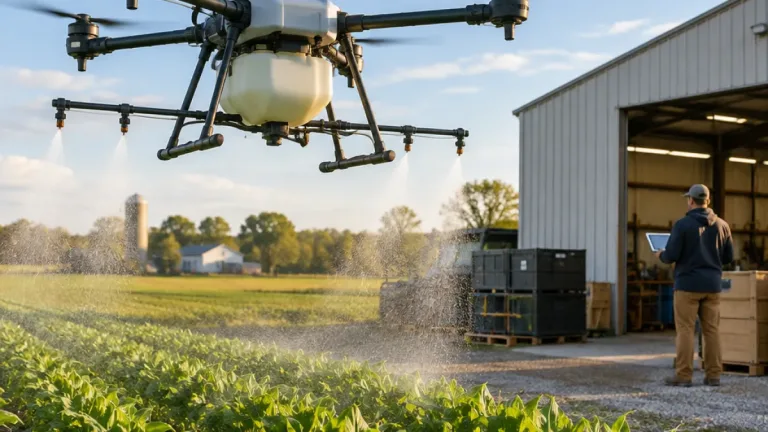
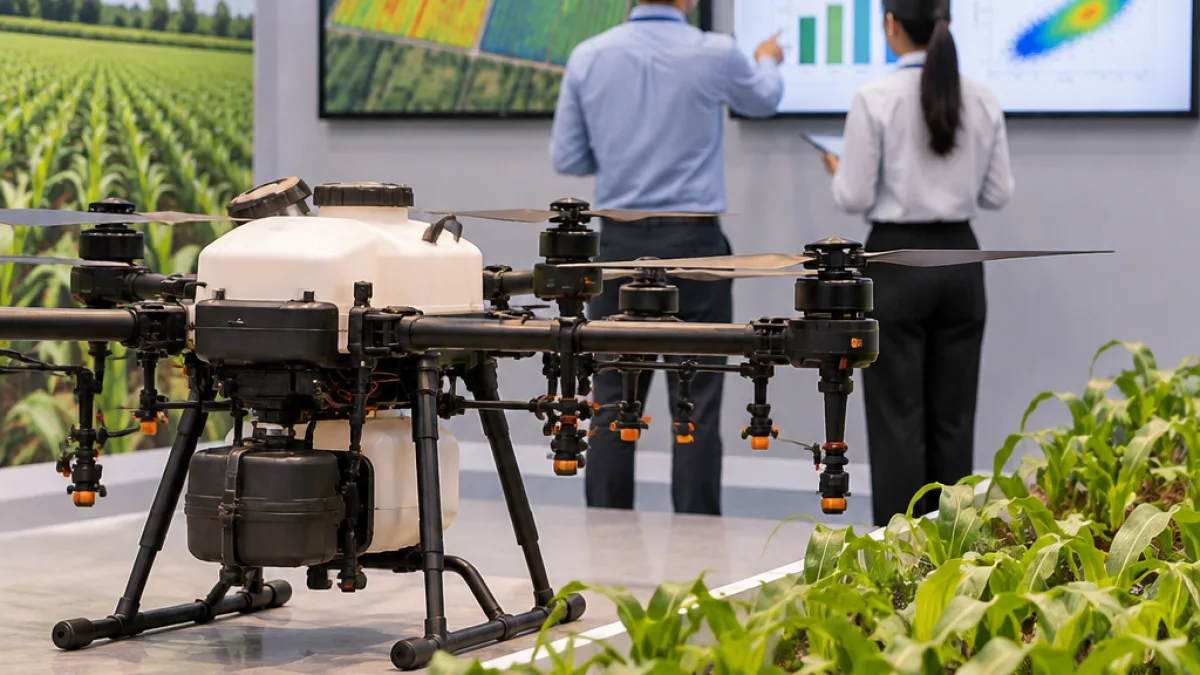
University of Missouri Extension researchers will present findings from several years of work on agricultural spray drones at the organization’s Crop Management Conference on December 3-4 in Columbia, Missouri. The research has focused on how drone-based applications perform against conventional ground spraying in field conditions.
Kevin Bradley, a University of Missouri Extension weed scientist, and doctoral candidate Jesse Yount have examined two main uses: applying fungicides and delivering herbicides to specific areas of a field. Their work is aimed at measuring how the systems perform beyond the basic question of whether a drone can carry and release a spray product.
Research focuses on application performance
The studies evaluate several factors that directly affect farm operations. These include the distribution of spray across the crop, the accuracy of the application, movement beyond the intended treatment area and the resulting performance against weeds and crop diseases.
That combination of measurements is important because a drone application can be judged differently depending on the intended job. A treatment may need to reach a dense crop canopy, target weeds in selected areas or provide enough coverage to control a disease. Bradley’s presentation is expected to address how those requirements compare with the capabilities and limitations of ground equipment.
- Spray coverage: how evenly the treatment reaches the crop.
- Application accuracy: whether the product is placed where it is intended.
- Off-target movement: how much spray moves beyond the treatment area.
- Control performance: how applications affect weeds and crop diseases.
Part of a broader weed-management discussion
The presentation will also consider where spray drones could fit into existing farming practices. That discussion will include their potential benefits as well as operational limitations, rather than treating the aircraft as a replacement for every conventional application method.
Bradley is also scheduled to cover changing weed-management pressures, herbicide resistance and new herbicide developments. Those subjects place drone spraying within a larger farm-management problem: selecting an application method that can address crop threats while limiting unnecessary treatment and unintended movement.
The Crop Management Conference will bring agricultural specialists together for a two-day program focused on crop-production challenges and current research. A separate presentation will examine seven decades of herbicide advertising and changes in marketing strategies. Registration for the conference is due by November 27, ahead of the December meeting at the Stoney Creek Hotel in Columbia.